 English
 русский
 عربى
عربى

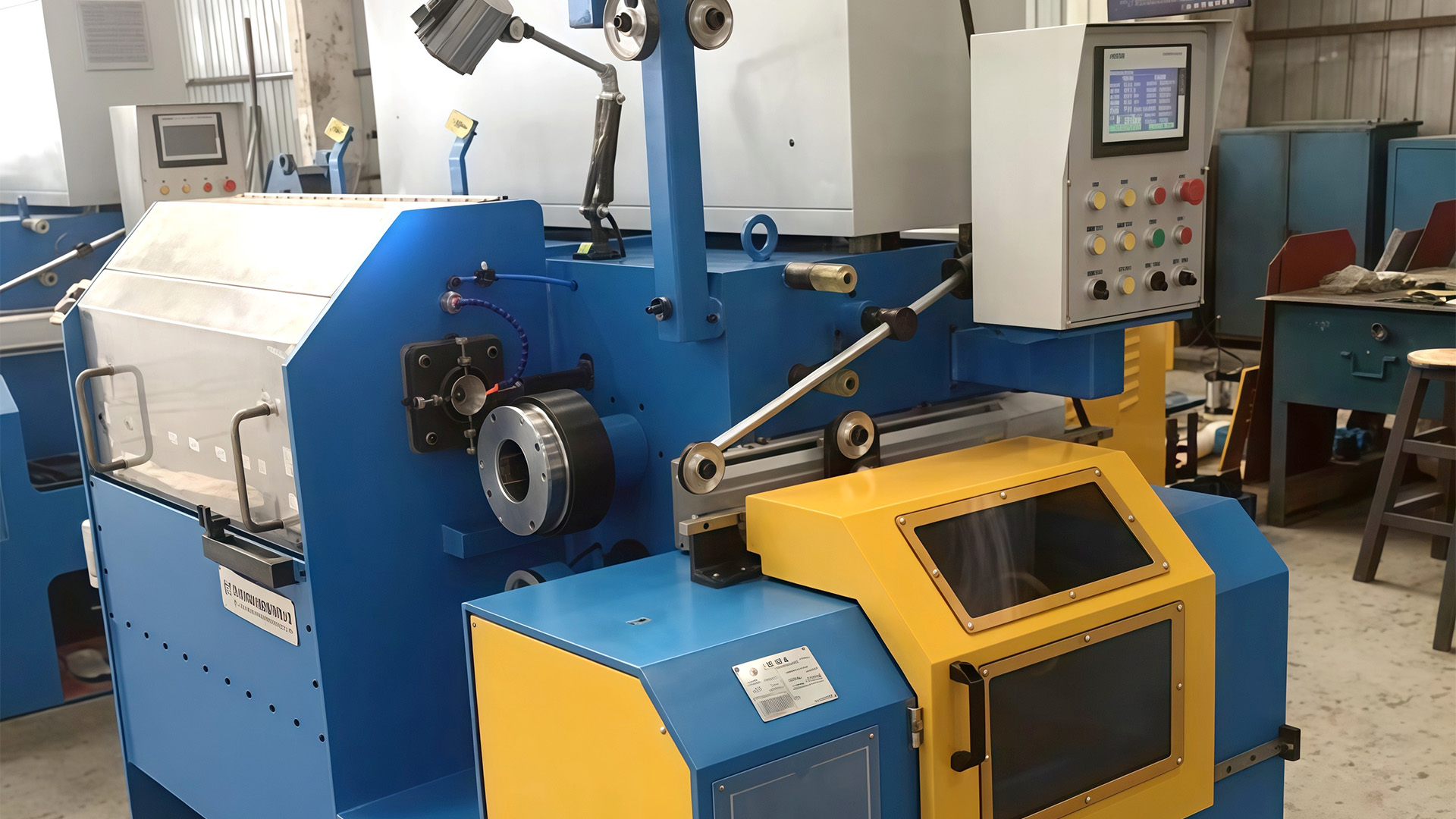
The Nail Making Machine and Barbed Wire Machine handle different wire diameters through adjustable feeding rollers, precision dies, and customizable cutting mechanisms. By calibrating the machines for specific wire gauges, operators can maintain consistent nail or wire quality without excessive material waste. These adjustments are crucial in industrial production where even minor deviations in wire thickness can compromise final product integrity.
Wire Feeding and Roller Adjustment in Nail Making Machine & Barbed Wire Machine
Both the Nail Making Machine and the Barbed Wire Machine rely heavily on adjustable feed rollers to accommodate varying wire thicknesses. These rollers are capable of handling wire diameters from 1mm to 6mm depending on the machine model. Proper adjustment ensures smooth wire movement, reducing the risk of bending, jamming, or inconsistent product quality.
For example, when producing nails from 2.5mm wire, the Nail Making Machine can maintain a speed of approximately 120 nails per minute. Meanwhile, a Barbed Wire Machine processing 4mm wire for fencing can produce roughly 50 meters of barbed wire per minute, demonstrating the importance of feed roller calibration for performance consistency.
Precision Dies and Cutting Mechanisms
Once the wire is fed correctly, both machines use precision dies to shape the material. In the Nail Making Machine, these dies form uniform nails, while in the Barbed Wire Machine, the dies twist and cut the wire to create sharp, evenly spaced barbs. The dies are either interchangeable or adjustable to accommodate different wire diameters. Smaller wires require tighter die tolerances, whereas thicker wires require slightly more clearance to avoid deformation.
Additionally, the cutting mechanisms in these machines are designed to maintain the correct length and shape. For instance, a Nail Making Machine can cut a 2.5mm nail precisely without bending, while the Barbed Wire Machine can produce barbs spaced exactly 10 cm apart on 3.5mm wire. These adjustments are critical to ensure that both nails and barbed wire meet quality and safety standards.
Impact on Production Speed and Efficiency
Different wire diameters influence production speed in both Nail Making Machine and Barbed Wire Machine. Thicker wires require higher force and slightly slower processing to maintain precision. For example:
| Wire Diameter | Nail Making Machine Speed | Barbed Wire Machine Speed |
|---|---|---|
| 1.5mm | 150 nails/min | 80 meters/min |
| 3.0mm | 100 nails/min | 50 meters/min |
| 4.5mm | 70 nails/min | 30 meters/min |
By understanding these limitations, operators can plan production schedules more effectively, avoiding machine overloads and optimizing output for both nail and barbed wire production.
Automatic Gauge Detection and Sensors
Many modern Nail Making Machines and Barbed Wire Machines feature automatic gauge detection sensors. These sensors detect the wire diameter and communicate with the machine's control system to adjust feed rollers, die spacing, and cutting speed automatically. This reduces human error, particularly in facilities where multiple wire gauges are used in a single shift.
For example, a Nail Making Machine can transition from 2mm to 3.5mm wire in less than 10 minutes, while a Barbed Wire Machine can switch from 3mm to 4.5mm wire with minimal downtime. This automation increases overall production efficiency while maintaining consistent product quality.
Maintenance and Calibration Considerations
Proper maintenance is essential for both Nail Making Machine and Barbed Wire Machine when handling multiple wire diameters. Routine tasks include:
- Lubricating feed rollers to prevent wire slipping or jamming
- Inspecting and adjusting die clearance based on wire diameter
- Checking cutting blades for wear and alignment
- Calibrating sensors in machines equipped with automatic gauge detection
- Cleaning the wire entry and exit channels to avoid metal buildup
Regular maintenance ensures that both machines can reliably produce nails and barbed wire within specification tolerances while minimizing downtime and material waste.
The Nail Making Machine and Barbed Wire Machine handle different wire diameters through a combination of adjustable rollers, precision dies, customizable cutting mechanisms, and automatic gauge detection sensors. Proper calibration and maintenance enable these machines to operate efficiently, produce high-quality nails and barbed wire, and minimize downtime. Understanding the interplay between wire diameter, feed speed, die tolerance, and cutting mechanisms allows operators to optimize production, meet industry standards, and maximize operational efficiency across diverse industrial applications.
By applying these principles, manufacturers can ensure that both Nail Making Machines and Barbed Wire Machines deliver reliable, high-quality outputs, whether producing nails for construction projects or barbed wire for fencing and security purposes. The ability to handle a wide range of wire diameters effectively makes these machines indispensable in modern manufacturing facilities.