 English
 русский
 عربى
عربى

Industrial Engineering — Manufacturing Insight
A wire drawing machine's efficiency is not a fixed number—it changes significantly depending on the diameter of the wire being processed and the hardness of the base material. Machines processing coarse wire run considerably faster than those drawing fine wire, and soft metals like copper move through the line far more efficiently than hardened alloys.
Direct Answer: Efficiency Drops as Diameter Shrinks and Hardness Rises
In practical terms, machines processing coarse wire (above 3mm) typically run 20–35% faster than the same equipment drawing fine wire below 0.5mm, because thinner wire requires slower line speeds to avoid breakage, more frequent die changes, and tighter tension control. Similarly, soft metals like annealed copper draw 15–25% faster than harder alloys such as stainless steel or high-carbon steel, since harder materials generate more friction, heat, and die wear per pass.
Understanding these relationships helps operators set realistic production targets and helps buyers evaluate wire drawing machine cost against expected throughput for their specific product mix. The remainder of this article breaks down exactly how diameter and hardness affect machine performance, what data supports these patterns, and how to optimize equipment selection and operation to minimize efficiency losses.
Why Wire Diameter Changes Machine Throughput
Diameter reduction is the core function of a wire drawing machine, but it is also the primary variable that limits speed. As wire gets thinner, the cross-sectional area available to resist tensile stress shrinks. If line speed is not reduced accordingly, the wire snaps mid-draw, causing downtime for re-threading. This is why fine-wire drawing machines are often engineered with different gearing and tension systems than coarse-wire equipment, even though both may be marketed under the same general category.
Coarse Wire vs Fine Wire Behavior
For coarse wire (typically 3mm to 8mm starting diameter), machines can often run at 800–1200 meters per minute because the wire has enough structural integrity to tolerate higher tension without breaking. Fine wire (below 0.5mm), by contrast, is usually limited to 300–600 meters per minute, and ultra-fine wire below 0.1mm may drop to under 150 meters per minute on standard equipment. This is not a flaw in the machine—it reflects the physical limits of the material being processed.
Fine wire doesn't fail because the machine is weak — it fails because the physics of the material leaves almost no margin for error.
Die Wear Accumulates Faster at Certain Diameters
Mid-range diameters (1mm to 3mm) tend to offer the best balance between speed and die longevity, since the drawing force is distributed evenly and the wire has enough rigidity to move smoothly through the die sequence. Very fine dies, on the other hand, wear faster in relative terms because even microscopic surface irregularities have an outsized effect on a small-diameter wire's final tolerance.
How Material Hardness Affects Drawing Speed and Tooling Life
Hardness determines how much force is required to reduce the wire's diameter at each die stage. Softer metals deform more easily, allowing higher line speeds and fewer intermediate annealing steps. Harder metals resist deformation, which increases friction, heat generation, and the load on the machine's motor and gearbox.
Soft Metals: Copper and Aluminum
A copper wire drawing machine generally achieves higher output rates than equivalent equipment processing steel or specialty alloys, because annealed copper has low tensile strength relative to its ductility. This is one reason copper wire production lines can often run continuously through multiple die passes without intermediate annealing, whereas harder metals require pauses to restore ductility before further reduction.
wire drawing machine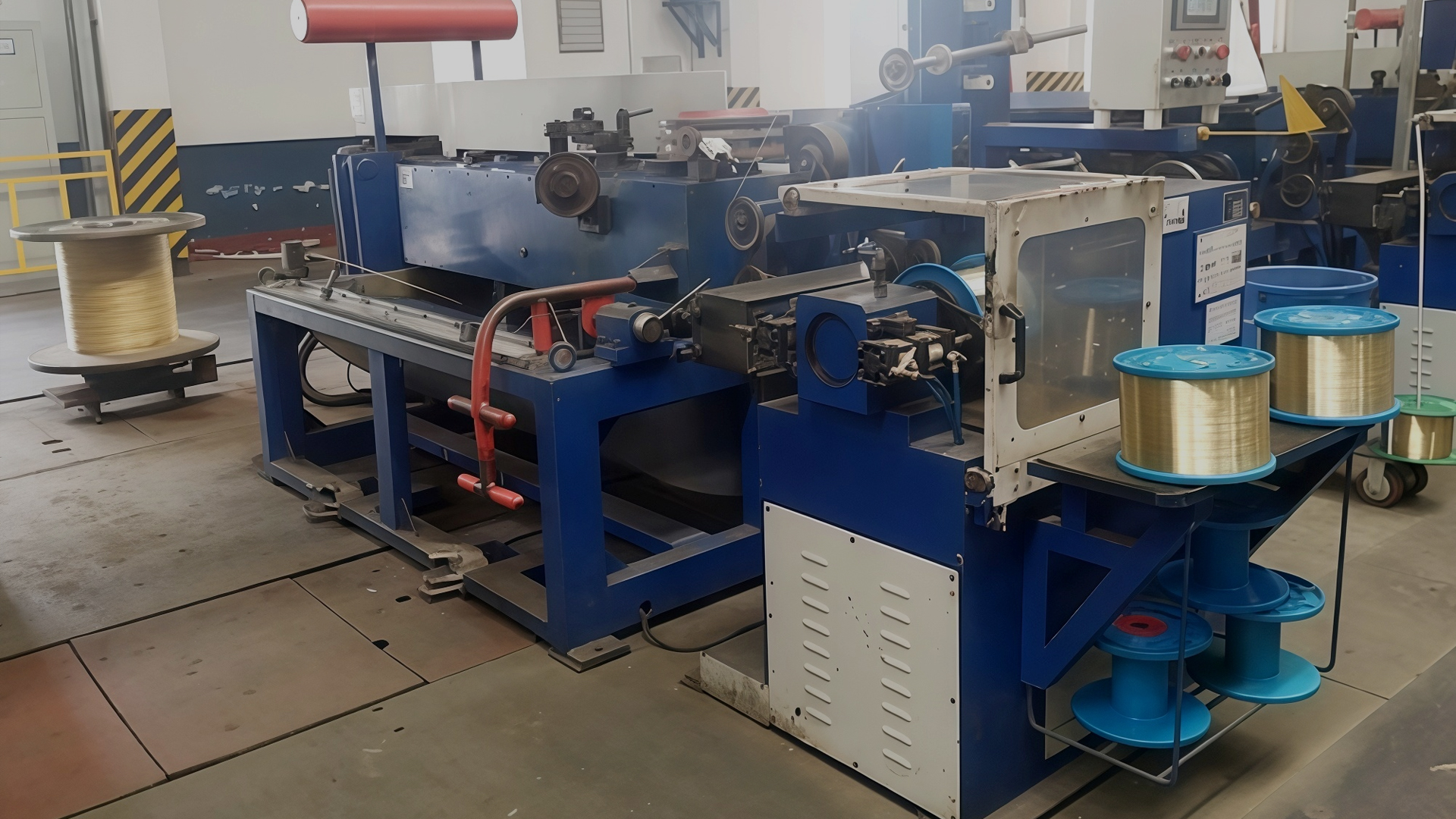
Info
Copper's low tensile strength relative to its ductility is precisely why dedicated copper lines can skip several intermediate annealing steps that hard-metal lines cannot avoid.
Hard Metals: Steel and Specialty Alloys
Steel and high-strength alloys demand slower speeds, more robust dies (often tungsten carbide or polycrystalline diamond for very hard wire), and more frequent intermediate annealing cycles. Die wear on hard-metal lines can be 2–3 times faster than on soft-metal lines, which directly increases tooling costs and reduces effective machine uptime.
Warning
Running hard alloys on tooling designed for soft-metal speeds accelerates die failure and increases the likelihood of unplanned downtime.
Comparative Data: Speed and Die Life Across Diameter and Hardness
The table below summarizes typical performance ranges seen on standard industrial wire drawing machines. These figures vary by manufacturer and machine design, but they illustrate the general pattern operators should expect when planning production schedules.
| Wire Type | Diameter Range | Typical Speed (m/min) | Relative Die Life |
|---|---|---|---|
| Annealed Copper | 0.1mm – 3mm | 500 – 1000 | High |
| Aluminum | 0.5mm – 4mm | 450 – 900 | High |
| Mild Steel | 1mm – 6mm | 250 – 600 | Medium |
| Stainless Steel | 0.3mm – 3mm | 150 – 400 | Low |
| High-Carbon Steel | 0.5mm – 5mm | 120 – 350 | Low |
As the table shows, copper consistently outperforms harder alloys in both speed and die longevity, which is a major reason many manufacturers dedicate separate lines to copper production rather than running mixed-material schedules on the same equipment.
How Efficiency Losses Translate Into Wire Drawing Machine Cost
Efficiency is not just a speed metric—it directly affects total cost of ownership. Lower throughput on fine or hard wire means more machine-hours are needed to hit the same production volume, which raises labor, energy, and maintenance expenses per finished ton of wire. When evaluating wire drawing machine cost, buyers should look beyond the sticker price and consider how the equipment performs across their actual product mix, not just under ideal test conditions.
Cost Factors Affected by Diameter and Hardness
- Die replacement frequency, which rises sharply for hard-metal or ultra-fine wire production.
- Energy consumption per ton, which increases as more passes and higher force are needed for harder alloys.
- Labor hours per batch, since slower lines require longer supervised runtime to reach target output.
- Scrap and rework costs from wire breakage, which are more common on thin or brittle materials.
Why Dedicated Copper Lines Often Pay Off
Because a copper wire drawing machine can sustain higher speeds with lower die wear, many operations find that a dedicated copper line—rather than a general-purpose multi-material machine—delivers a better return over a 3–5 year period. The initial wire drawing machine cost may be similar, but the operating cost per ton produced is typically lower when the equipment is optimized for a single material's hardness profile rather than configured as a compromise across several metal types.
Success Case
Facilities that separate copper and hard-alloy production lines typically report lower operating cost per ton, driven mainly by reduced die replacement frequency.
Practical Ways to Improve Efficiency Across Diameters and Hardness Levels
Operators cannot change the physics of wire drawing, but they can make targeted adjustments to reduce the efficiency gap between easy and difficult wire types.
Match Die Material to the Wire Type
Using tungsten carbide dies for mid-hardness materials and polycrystalline diamond dies for fine or hard wire reduces wear rates and allows more consistent speeds across production runs. This single change can extend die life significantly on hard-metal lines.
Optimize Annealing Schedules
Inserting intermediate annealing at the correct intervals restores ductility before it becomes a limiting factor, allowing harder materials to be drawn at closer to their theoretical maximum speed without increasing breakage risk.
Calibrate Tension Control for Each Diameter
Fine wire benefits from precise, low-variance tension control systems. Investing in a machine with programmable tension zones—rather than a single fixed setting—lets operators fine-tune speed for each diameter range without manually reconfiguring the entire line.
Monitor Lubrication Quality
Lubricant breakdown accelerates die wear and heat buildup, particularly on hard-metal lines. Routine lubricant testing and replacement schedules help maintain consistent speeds and reduce unplanned downtime.
Danger
Neglecting lubricant testing on hard-alloy lines can lead to rapid, compounding die wear and sudden production stoppages that are far costlier than routine maintenance.
Key Takeaways for Buyers and Operators
- Efficiency varies significantly by diameter—coarse wire runs faster and wears dies less than fine wire.
- Softer metals like copper and aluminum consistently outperform harder alloys in both speed and tooling longevity.
- A dedicated copper wire drawing machine often delivers better long-term value than a general-purpose multi-material line.
- Wire drawing machine cost should be evaluated against real production data for your specific material mix, not just headline speed specifications.
- Die material selection, annealing schedules, tension control, and lubrication quality are the most effective levers for closing the efficiency gap between easy and difficult wire types.
Ultimately, understanding how diameter and hardness interact with machine performance allows manufacturers to set realistic throughput expectations, budget accurately for tooling and maintenance, and choose equipment configurations that align with their actual production requirements rather than generic industry averages.