 English
 русский
 عربى

Ask five people what a high speed wire drawing machine is for and you will get five answers, and all of them are correct. One says throughput. One says surface finish. One says holding a tolerance across a twelve-hour shift without an operator chasing it. Speed is only the headline; the applications are where the machine proves itself.
What follows is a working tour of the applications we meet most often on customer floors, along with the process details that decide whether the extra metres per minute reach the take-up spool or end up in the scrap bin.
What High Speed Really Changes on the Floor
A line running at thirty metres per second and one running at twelve obey the same physics, but they do not feel the same. Speed amplifies everything: die pressure, heat building in the capstan, a hint of slip at the first drum, a small mismatch between drawing and take-up. On a slow line an operator can chase those deviations. At high speed the machine has to absorb them by design.
That is why the sensible question is never which machine is fastest, but which arrangement keeps the process stable at the speed you actually need. Straight-through machines, explained in our note on the principle of straight wire drawing, keep each capstan turning at a slightly different ratio so the wire is pulled rather than dragged. Inverted and wet configurations trade some of that simplicity for cooling and surface protection, which matters a great deal with certain materials.
If a line cannot hold diameter tolerance at sixty percent of its rated top speed, the limit is usually lubrication, tension control or take-up synchronisation. Changing the motor will not fix it.
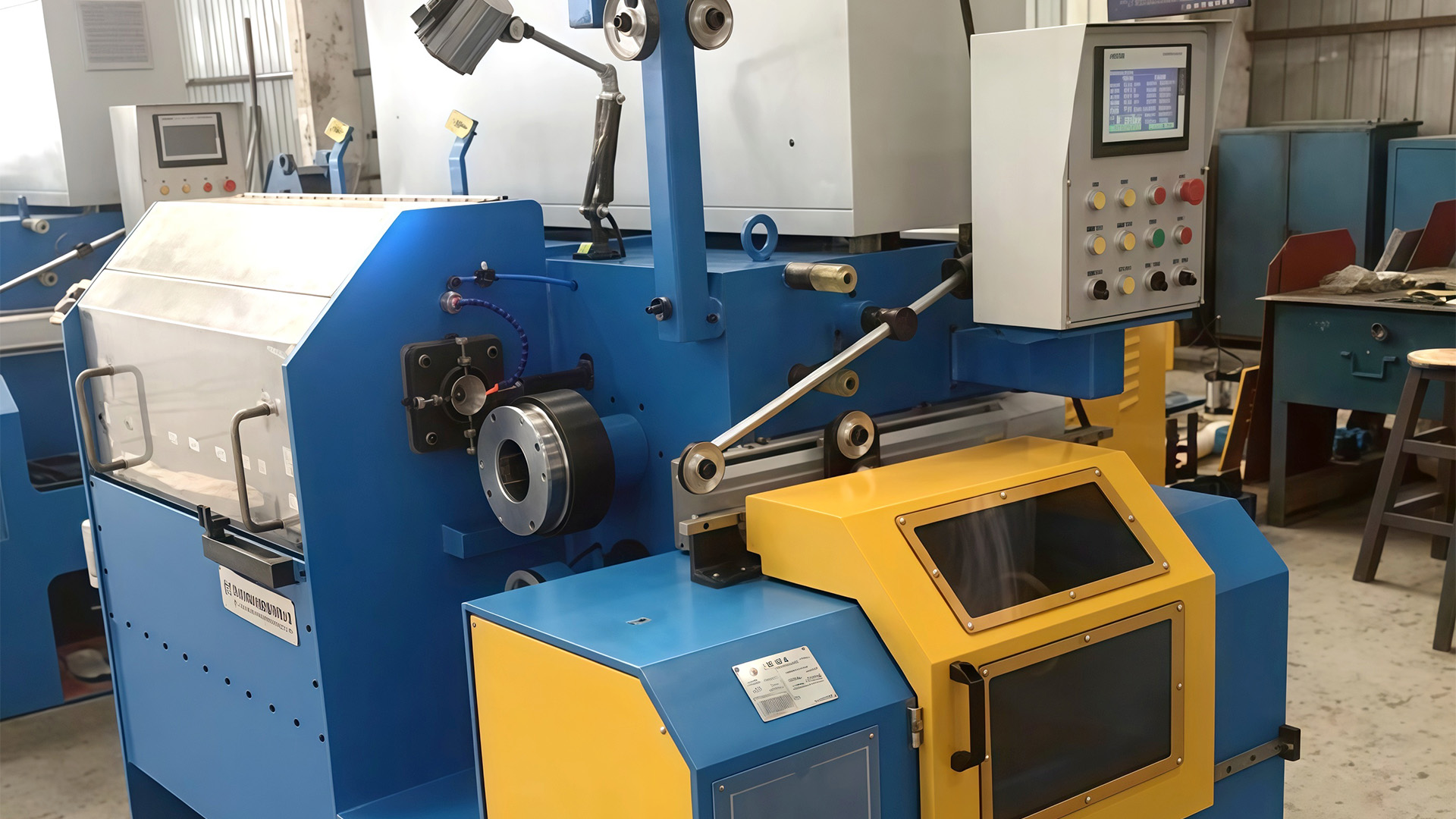
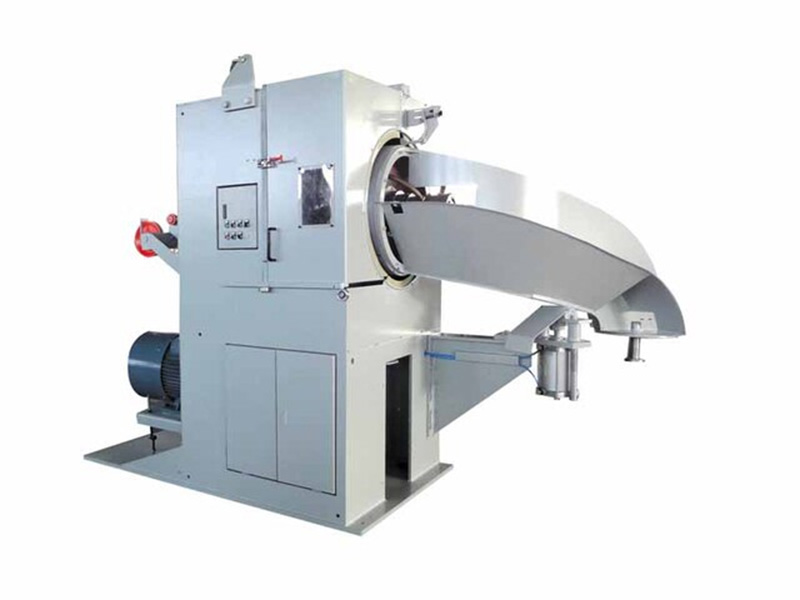 Inverted High Speed Wire Drawing MachineThe inverted high-speed design supports precise diameter control, surface finish and material properties for automated wire drawing with minimal downtime.View Product →
This is the logic behind the inverted high speed platform we build, and behind the questions we ask before any quotation is written: what wire, what finish, what take-up, what shift pattern.
Application One: Nails, Fasteners and General Hardware
Low carbon steel rod drawn down to the gauge a header or roller needs is one of the oldest pairings in the trade, and still one of the most demanding on consistency. A nail plant does not buy wire because it likes wire; it buys wire because the press downstream forms a head from it several hundred times a minute.
When drawing speed climbs, two things start to matter more than they did on a slower line. Diameter stability across the coil, because a drifting gauge changes cut length and head volume. Surface condition, because a scratch that leaves the die box becomes a crack in the finished product or premature tool wear in the heading station.
- Hold diameter within the tolerance your header tooling was cut for, coil after coil.
- Keep the exit surface free of scoring, since heading and thread rolling both amplify it.
- Match spool weights to your press run so changeovers do not eat the speed gain.
High Speed Nail Making Machine for Automated Nail ProductionAutomated feeding, cutting, heading and tip forming make it suitable for high-volume nail output, with adjustable settings for different nail types.View Product →
Drawing and nail making are one process in practice, which is why we look at both sides of the line before recommending a machine.
Application Two: Welded Mesh, Fencing and Screening
Mesh producers tend to care about three properties that drawing either gives or takes away: straightness, uniform tensile strength and a surface that will accept zinc. A coil with residual bend fights every welder and every straightener downstream, and a coil with inconsistent tensile changes the way the panel behaves under load.
High speed drawing helps here mostly by being regular. A steady tension profile and controlled slip mean the finished wire leaves the last capstan with less stored stress, so the mesh line sees the same wire at the start of the coil as at the end.
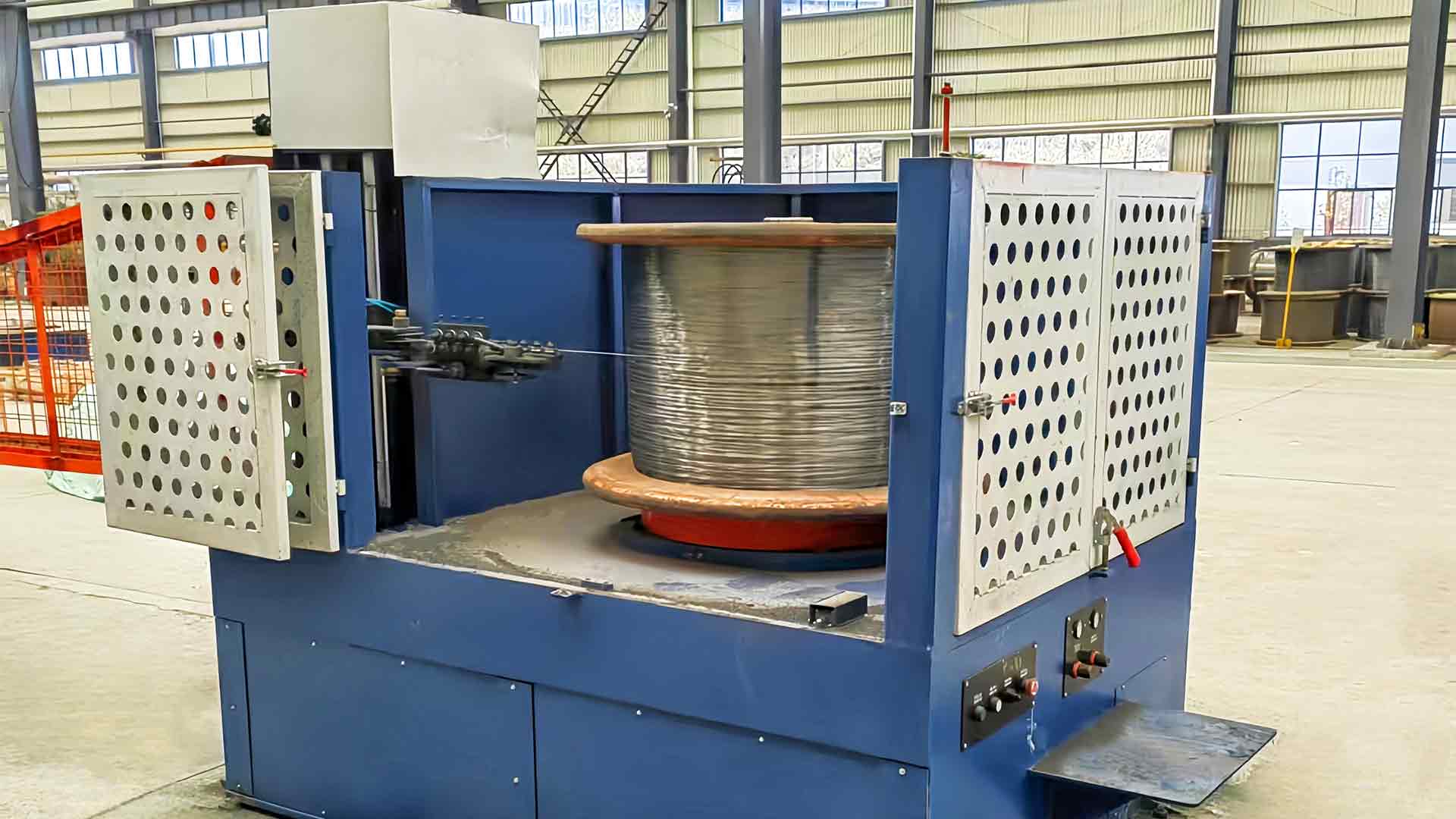
Automatic Direct Wire Drawing Machine for Wire Mesh ProductionStraight-in feeding removes extra handling, while multi-stage dies draw wire for mesh lines and help maintain surface condition before coating.View Product →
Hot dip galvanising hides nothing. Small drawing marks that look acceptable in bare wire often bloom into rough patches after coating, so inspect the exit surface before the coil leaves the line.
Application Three: Cable, Welding Wire, Bead Wire and Fine Gauges
This is where the material, not the tonnage, sets the specification. Aluminium clad steel needs a low friction die set and gentle tension so the cladding stays concentric and intact. Copper for automotive harness work is drawn wet and multi-die, and the annealing or spool change that follows has to keep up. Stainless steel rewards cooling and clean lubrication more than raw line speed, because a smeared surface is difficult to recover later.
The last two dies decide what your customer receives. The first ten only decide how quickly you get there.
Welding wire is a good illustration. Filler wire is fed at a controlled rate through a torch, so a slightly oval or scuffed wire changes arc behaviour long before it changes tensile strength. Tyre bead wire is the opposite case: tensile consistency and fatigue life dominate, and a stable tension profile at speed protects both.
Choosing the Route for Your Material
Most application mistakes happen at the quotation stage, when a machine is chosen for its headline speed instead of for the wire it will spend the next decade drawing. The table below is the rough map we use in early conversations; the details change once the die sequence and take-up format are known.
| Wire or product | Usual route | What speed adds | What to watch |
|---|---|---|---|
| Low carbon steel for nails and mesh | Straight-through or pulley type | Throughput per die pass, steadier coil uniformity | Die wear, lubricant supply, exit surface |
| Stainless steel wire | Wet water tank drawing | Fine gauge output with a cleaner finish | Cooling, emulsion quality, drag-out |
| Aluminium clad steel | Straight-through with servo drive | Uniform cladding thickness at line speed | Die friction, tension on the clad surface |
| Copper for harness and enamelled wire | Multi-die wet drawing | High speed with fine gauge capability | Annealing, spool change, oxidation |
| Welding wire and bead wire | Straight-through with high speed take-up | Consistent diameter and tensile over the coil | Slip control, take-up synchronisation |
Read the table as a starting point, not a rule. A plant drawing two materials on one line will often accept a lower top speed in exchange for faster changeover, and that is a perfectly good engineering decision.
The Supporting Equipment Decides Your Real Line Speed
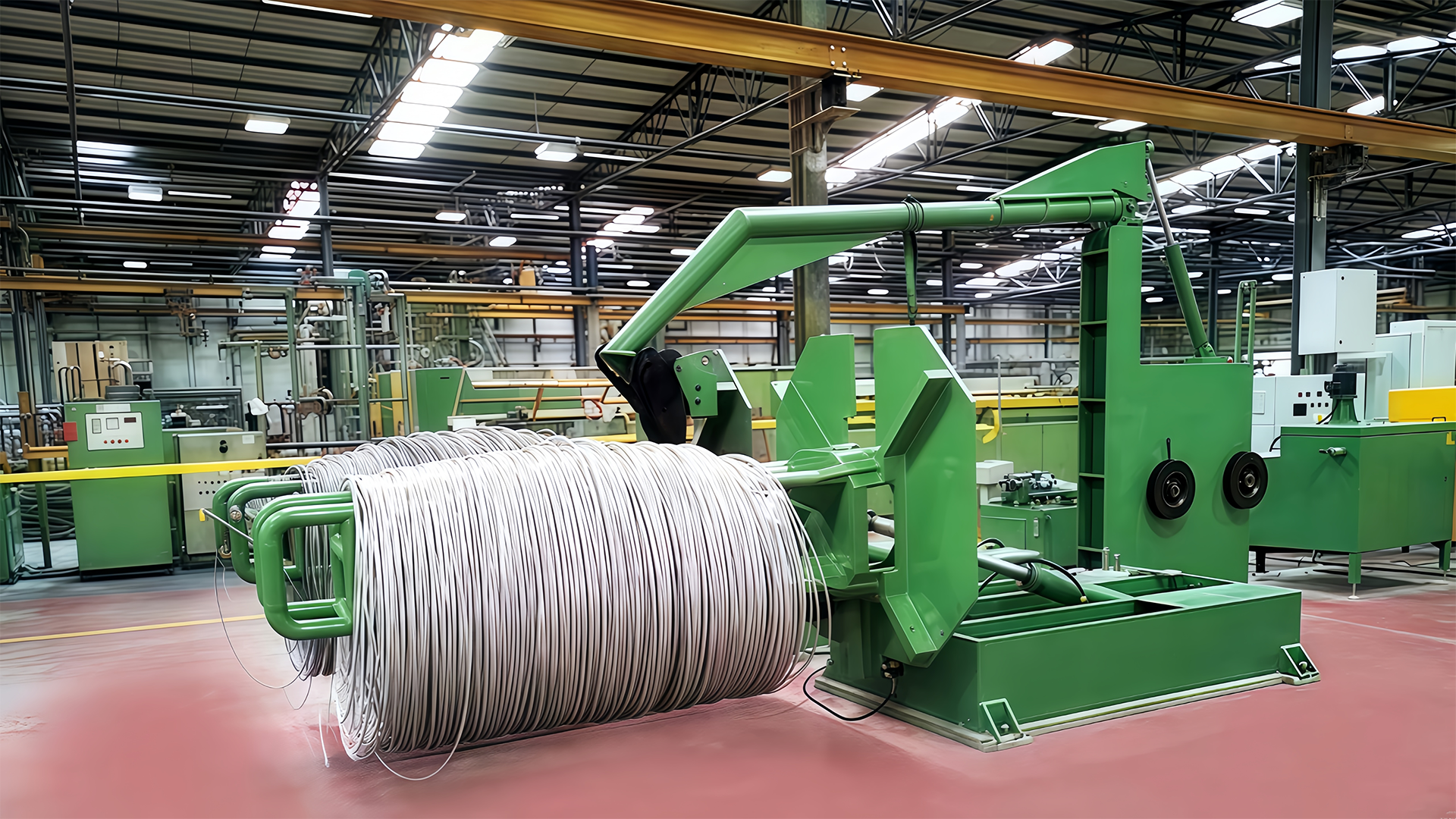
The drawing machine is the visible part of the line, but the speed you can actually sustain usually comes down to what sits before and after it. A payoff that cannot hold steady tension forces the first capstan to fight the spool. A take-up that responds late turns a clean drawing operation into a coil with uneven lay and wandering tension.
Our payoff range exists for that reason: tension has to be established before the wire reaches the first die, not corrected after it leaves the last. On the other end, take-up selection, whether spool, stemless or inverted, determines how much of the drawing speed survives the packaging stage.
- Payoff tension stability, including brake response as the spool steps down in diameter.
- Take-up synchronisation with the final capstan, especially during acceleration.
- Die quality and cooling, plus a lubricant supply that stays consistent over a full shift.
- Surface preparation such as phosphating or coating, which decides how much friction the dies see.
- Straightening, pointing and welding equipment that keep stoppages short between coils.
On a well matched line the operator spends the shift watching tension and temperature trends, not the die box. Friction correction should be a weekly task, not an hourly one.
Six Checks Before You Commit to a Faster Line
- Confirm the material and the final gauge, not just the incoming rod size.
- Ask what the downstream machine tolerates; a nail press and a mesh welder accept different surface conditions.
- Check cooling capacity honestly, including summer ambient conditions inside your building.
- Review take-up format and spool weight against your real changeover rhythm.
- Plan die and lubricant consumption as a running cost, because speed raises both.
- Run a trial coil at production speed and inspect the full length, not the first fifty metres.
Buying speed you cannot feed. A machine rated well above the output your payoff, dies and downstream equipment can support simply moves the bottleneck and adds wear.
Start From the Wire, Then Choose the Speed
Every application above comes back to the same idea. The useful number is not the maximum metres per minute on the nameplate, but the speed at which your wire stays uniform, your surface stays clean and your operators stay calm. Get that right and the tonnage follows on its own.
We have been building drawing, payoff, take-up and nail making equipment in Wuxi since the family workshop days of the mid nineties, and shipping it to more than forty countries. The lessons behind this article came from those installations rather than from a catalogue, so if your material is unusual, tell us about it before we talk about speed.