 English
 русский
 عربى
عربى

Imagine a cable plant that receives 8.0 mm copper rod and needs to produce 1.5 mm wire for building wire, plus 0.20 mm fine wire for magnet wire. The temptation is to compare copper wire drawing machines by maximum speed alone. The better approach is to start from the full process: rod quality, reduction schedule, cooling capacity, lubrication, take-up format, and control. A copper wire drawing machine is not just a single frame with capstans; it is the center of a coordinated line that has to hold diameter tolerance, protect the copper surface, and keep operating costs predictable. That is why experienced buyers evaluate the machine together with the payoff equipment, die package, cooling system, and take-up. This guide explains what to look for in a copper wire drawing machine and why the right choice depends on output diameter, material condition, and line configuration.
What a Copper Wire Drawing Machine Must Do
A copper wire drawing machine reduces copper rod or wire through a series of dies. Each pass applies tensile force, the cross-section shrinks, and the wire elongates. For most copper applications, the reduction per pass stays within 15 to 25 percent, depending on the inlet diameter, the die angle, and the lubrication condition. The machine also has to manage heat. Copper softens quickly at moderate temperatures, so poor cooling shows up as surface oxidation, stuck lubricant, or uneven grain structure.
Because of these requirements, a copper wire drawing machine should be evaluated as a thermal and mechanical system, not only as a speed rating. The table below summarizes the three common machine layouts used in copper wire production.
| Machine Concept | Inlet Range | Outlet Range | Common Copper Use |
|---|---|---|---|
| Dry straight-line drawing | 8.0 mm rod | 1.2 to 4.0 mm | Medium wire for cables and conductors |
| Wet water tank drawing | 2.0 to 3.5 mm | 0.10 to 0.80 mm | Fine wire for winding and stranding |
| Inverted or pulley drawing | 8.0 to 12.0 mm | 2.0 to 6.0 mm | Rod breakdown, coil-to-coil operation |
Copper Wire Drawing Machine Configurations: Which Layout Fits Your Process?
Straight-line machines for medium copper wire
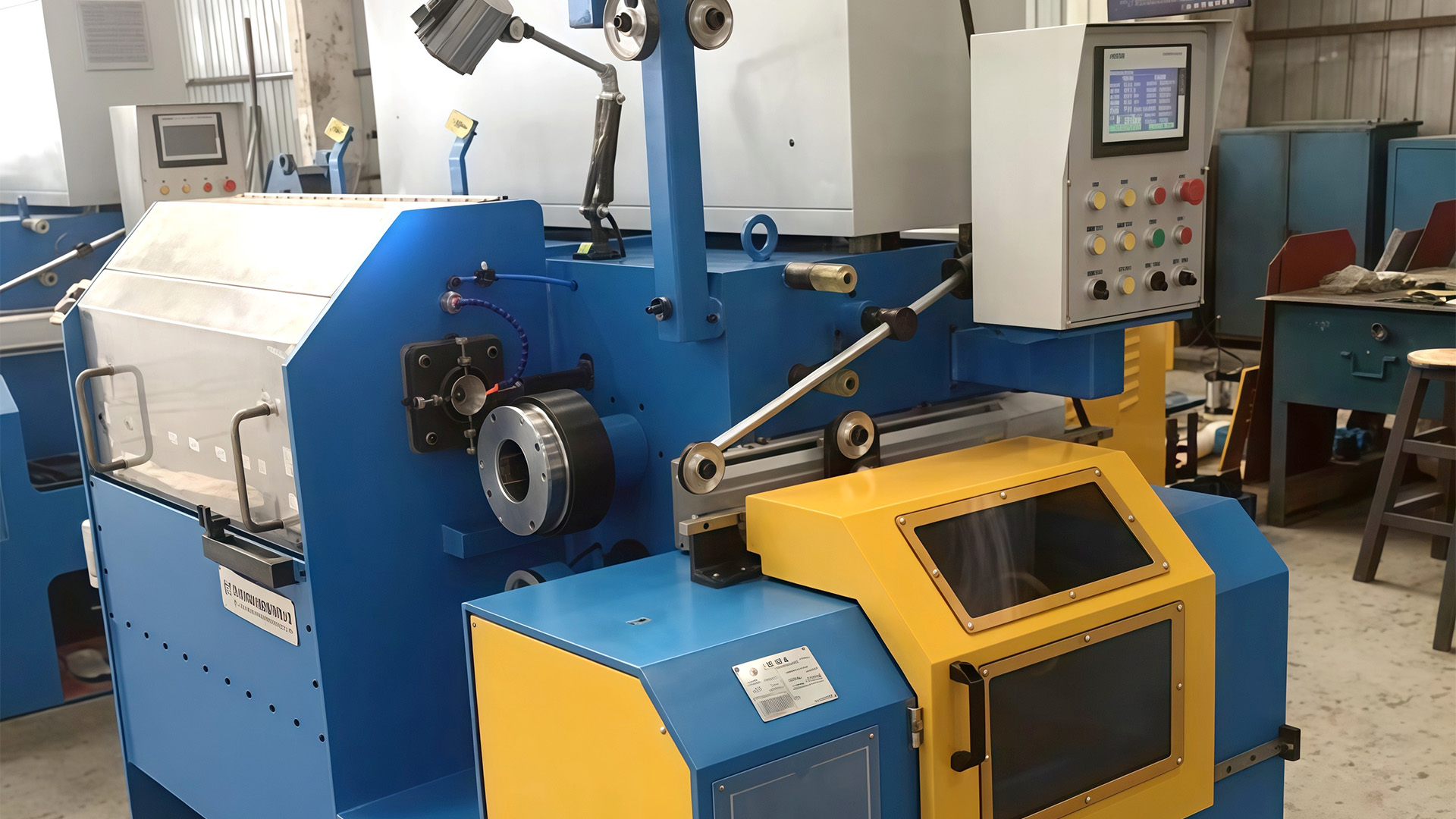
Straight-line machines arrange the capstans in one row, and the wire passes through each die in sequence with controlled slip. This layout suits medium copper wire, typically from 8.0 mm rod down to 1.2 to 4.0 mm. Because each capstan has its own drive, the operator can set a separate speed for every stage. Newer servo-driven models improve tension control during starting and stopping. Jinding Technology offers servo direct-drive straight-line wire drawing machines that combine this frame with direct-drive motors for stable operation.
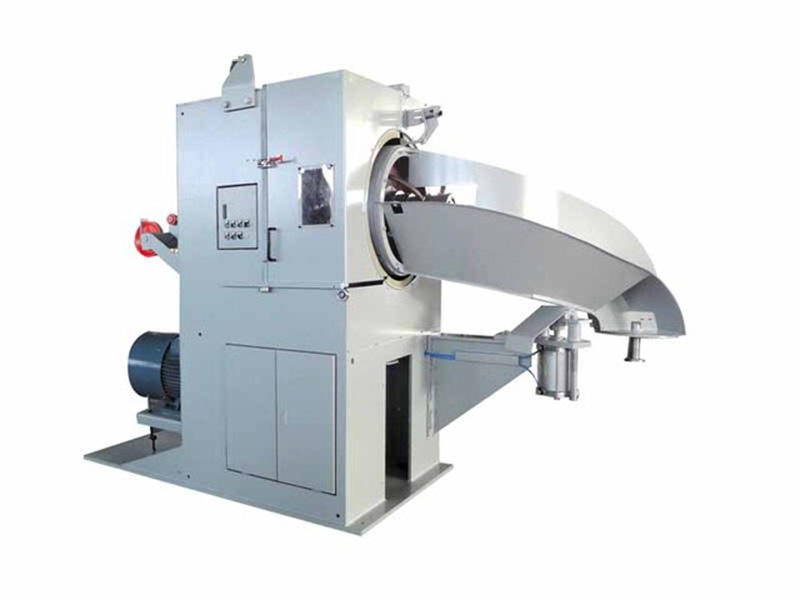 OEM/ODM Servo Direct Drive Direct Wire Drawing Machine Suppliers, Factory - WuxiWuxi Xin Jinding Technology Co., LTD. is China OEM/ODM Servo Direct Drive Direct Wire Drawing Machine suppliers and factory,The servo dir...View Product →
Water tank machines for fine copper wire
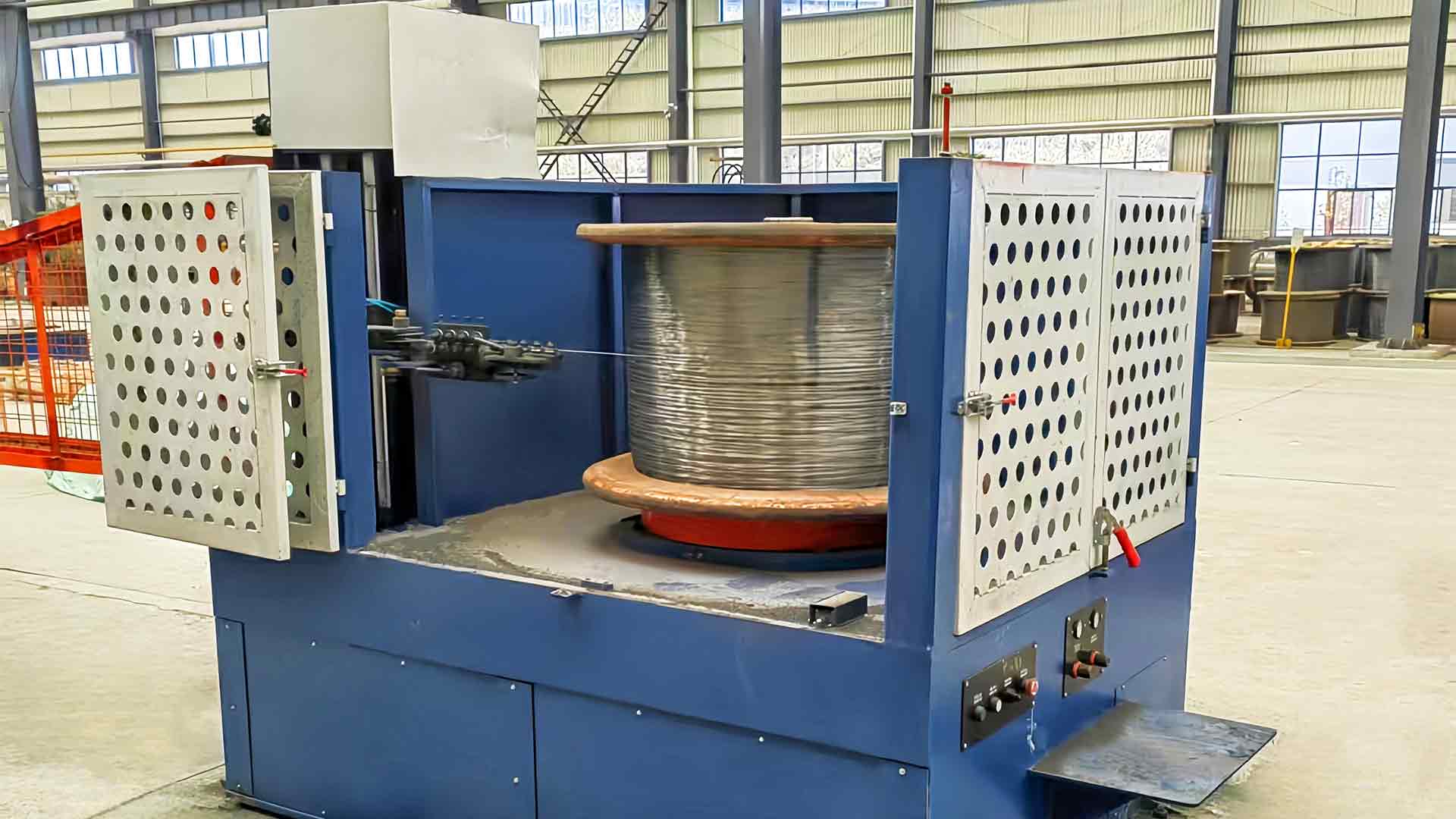
For copper wire below about 0.8 mm, water tank machines are the normal choice. The capstans run inside a tank of drawing emulsion, so the wire stays cooled, clean, and lubricated during every pass. This wet drawing principle avoids the heat damage that can appear when thin copper wire is processed in a dry machine. Magnet wire, strand conductors, and fine cable conductors are typical outputs. Jinding Technology’s wet water tank wire drawing machines are designed for this range; the specifications to check are the number of dies, capstan speed range, and emulsion pump capacity.
OEM/ODM Wet Water Tank Wire Drawing Machine Suppliers, Factory - Wuxi Xin JindinWuxi Xin Jinding Technology Co., LTD. is China OEM/ODM Wet Water Tank Wire Drawing Machine suppliers and factory,The Wet water tank wire ...View Product →
Inverted and pulley machines for heavy rod
Inverted and pulley machines are used more in steel wire, but they still appear in copper rod breakdown lines. The wire passes over a large vertical drum, so the bending diameter is large enough for stiff material. This layout is practical when a plant wants to take 8 to 12 mm rod down to 2 to 6 mm and deliver the wire as a coil for the next intermediate drawing stage. A rod breakdown line often runs without a spool, which reduces handling time and lets the next machine draw directly from the coil.
The working principle of straight-line wire drawing machines helps explain why the straight-through layout is so widely used for medium copper sizes: the controlled-slip, low-bending path keeps surface quality high and energy loss low.
What to Check Before Buying a Copper Wire Drawing Machine
Inlet rod and final wire diameter
The supplier’s specification sheet always lists a diameter range, but the machine has to be set up for your actual rod. A line built for 8.0 mm rod may handle 6.35 mm rod only with a different die schedule. Check the allowed variation of the incoming rod: ovality, burrs, and oxidized surface affect lubrication and die life.
Reduction schedule and die package
Ask the supplier to calculate the reduction schedule for your inlet and outlet sizes. The number of passes, capstan diameters, die angles, and motor power all follow from that calculation. If the schedule is too aggressive, the copper work-hardens and breaks; if it is too light, you need more passes and spend more energy per ton.
Cooling and lubrication system
Dry straight-line machines use die showers and capstan cooling. Wet water tank machines use an emulsion system with filtration and temperature control. Confirm the water flow rate, heat exchanger capacity, and emulsion tank volume. Poor lubrication increases die wear and leaves copper dust on the wire, which causes problems in later stranding or enameling.
Tension and take-up control
Tension changes cause diameter variation and wire breaks, especially on fine wire. The take-up unit must be synchronized with the final capstan. For that reason, wire take-up machine selection is part of the copper wire drawing decision, not an afterthought.
PLC and production data
Modern copper wire drawing machines use a PLC to monitor line speed, motor current, tension, and coolant temperature. The control screen lets the operator adjust parameters without opening panels. Data logging also supports traceability when the wire goes into automotive cables or winding wire.
A useful checklist before purchasing:
- Inlet rod diameter, tolerance, and surface condition
- Final wire diameter and allowed tolerance
- Drawing speed range and required line speed
- Die set, capstan diameter, and number of passes
- Cooling water supply and temperature control
- Payoff and take-up format
- PLC interface and production reporting
- Installation footprint and utility requirements
Production Quality and Operating Costs
Quality and cost come from the same group of parameters. On a copper line, the largest operating costs are usually die wear, electricity, and downtime. A machine that runs at a high nominal speed but needs frequent die changes may cost more per ton than a slightly slower line with stable lubrication.
Surface defects usually come from one of three sources: worn dies, insufficient cooling, or unstable tension. Once the lubricant film breaks, copper sticks to the die surface, scoring the wire. In wet drawing, the emulsion concentration and filtration level are as important as the machine speed.
Die consumption deserves special attention. Tungsten carbide dies are typical for medium drawing, while polycrystalline diamond dies last longer on fine copper wire. The die cost per ton depends on the reduction schedule, cooling, and lubrication. Reduction per pass and cooling capacity have a direct effect on die life and surface quality.
Power consumption is another factor. Direct-drive motors avoid belt losses and give better speed accuracy. If the line includes a continuous annealer, the annealer often consumes more electricity than the drawing machine itself, so overall system efficiency matters more than rated motor power alone.
Downtime also affects profitability. String-up, die change, and spool change are routine operations, but their frequency depends on line design. A machine with accessible die boxes, separate cooling zones, and a fast spool change mechanism reduces the time lost between coils.
Why a Full-Line Supplier Reduces Risk
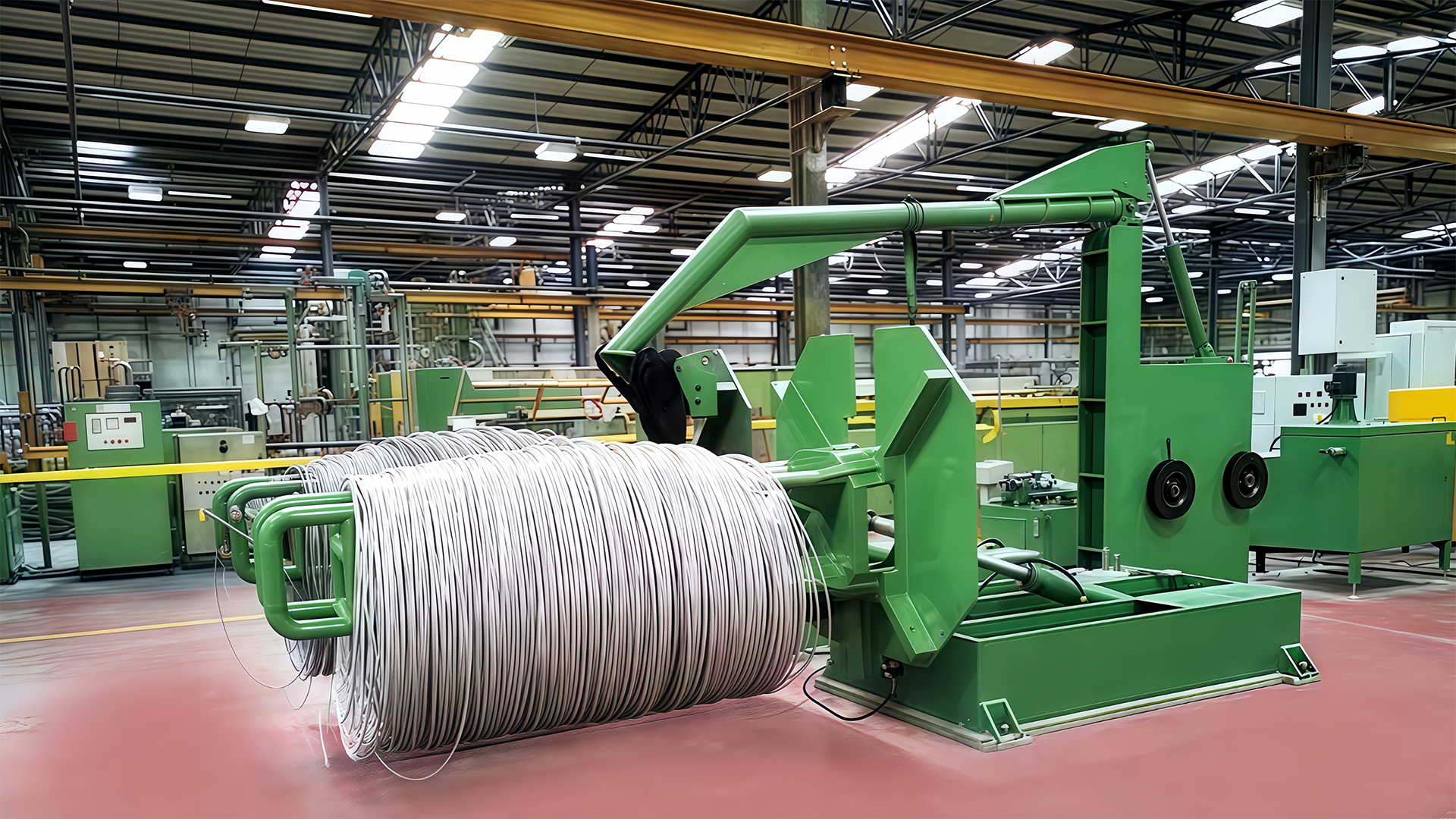
A copper wire drawing machine works with a payoff rack on one side and a take-up unit on the other. If those three parts are sourced from different suppliers, the interface becomes a risk. Tension matching, electrical signal compatibility, speed ramping, and emergency stop behavior have to be tested together.
A supplier that builds the payoff, drawing machine, and take-up units under one roof can coordinate those details more easily. For continuous operation, the take-up has to follow the last capstan without stretching the wire or creating loose laps. Jinding Technology’s 400-type high-speed wire take-up machines are one example of equipment designed to work with a drawing line rather than as a separate unit.
OEM/ODM 400 High Speed Wire Take-up Machine Suppliers, Factory - Wuxi Xin JindinWuxi Xin Jinding Technology Co., LTD. is China OEM/ODM 400 High Speed Wire Take-up Machine suppliers and factory,400 high speed wire take...View Product →
Copper wire producers also need to think about the next step after the take-up. Wire that goes into automotive wiring harnesses may require specific spool sizes and tight tension control. As shown in wire take-up applications in wiring harness production, the take-up format affects handling and downstream efficiency.
Jinding Technology, a metal wire machinery manufacturer in Wuxi, China, has supplied drawing and take-up equipment to customers in more than 40 countries. The company is ISO9001 certified and holds CE marking, and its product line covers straight-line drawing machines, inverted drawing machines, water tank machines, pulley machines, payoff racks, take-up units, and auxiliary equipment. That scope makes it possible to quote a coordinated copper wire drawing line instead of a stand-alone machine.
Final Recommendations
Before sending an inquiry, prepare these items:
- Inlet rod diameter and material standard, such as GB/T 3952 or ASTM B49.
- Final wire diameter and tolerance.
- Required line speed or daily output in tons.
- Take-up format: spool, coil, or inverted drum.
- Whether continuous annealing is needed before take-up.
- Available utilities: water supply, power capacity, floor space.
Ask the supplier for a complete reduction schedule and a die list. Request sample testing or references from a similar production line. Compare complete lines rather than a single machine frame. A copper wire drawing machine is an investment in the whole downstream process, so the purchasing decision should be based on the line it will run in, not on the nameplate speed alone.