 English
 русский
 عربى
عربى

High-Carbon Steel · Wire Drawing
The Practical Applications of High-Carbon Steel Wire Drawing Machines
From springs to prestressed strand, the machine behind precision-drawn high-carbon wire — and how to choose it for your production line.
Consider a 5.5 mm high-carbon rod entering a continuous drawing line. After seven dies and a final capstan at 15 m/s, it emerges as 1.2 mm spring wire. If the lubricant film fails, the die temperature crosses 300 °C and the wire fractures without warning. The machine that prevents that failure is not generic equipment — it is a high-carbon steel wire drawing machine engineered for heat, tension, and pass precision.
Here is the short version: high-carbon steel wire drawing machines are used wherever the finished wire must hold high tensile strength, consistent diameter, and a clean surface under fast production. That list includes springs, wire rope, prestressed concrete strand, barbed wire, chain-link fence, welded mesh, and high-strength nails. The rest of this article explains why each application places its own demand on the machine, and how to translate those demands into a purchasing decision.
Why High-Carbon Wire Requires a Dedicated Machine
High-carbon steel — typically 0.55 to 0.85 percent carbon — strain-hardens faster than low-carbon grades. Each pass through a die adds heat and work hardening. If the machine cannot remove that heat from the capstan and the die zone, the wire structure changes: pearlite begins to spheroidize, tensile strength drops, and drawing breaks multiply. This is why the application of a high-carbon steel wire drawing machine is defined less by the wire itself than by the machine's thermal control system.
Three factors separate a capable machine from a problematic one:
- Capstan cooling capacity. Water-cooled capstans with a high flow rate keep the surface temperature below the limit where lubrication and metal structure degrade.
- Back tension stability. A dancer arm or servo-controlled payoff prevents diameter fluctuation from one reel to the next.
- Pass schedule accuracy. The reduction per pass must match the material's work-hardening curve — typically 12 to 18 percent per pass for high-carbon grades.
Get these right, and the machine becomes a predictable tool. Get them wrong, and even the best steel rod will not produce reliable wire.
Main Applications of High-Carbon Drawn Wire
The real-world applications of a high-carbon steel wire drawing machine are the products that rely on a high strength-to-weight ratio:
| Application | Wire range | Critical requirement |
|---|---|---|
| Springs | 0.5 – 4.0 mm | Tensile tolerance, surface free of micro-cracks |
| Wire rope strands | 0.2 – 3.0 mm | Fatigue life, uniform diameter |
| Prestressed strand | 5.0 – 12.0 mm | Low relaxation, high yield strength |
| Barbed wire, chain-link | 1.0 – 3.5 mm | Coating adhesion, bendability |
| High-strength nails | 1.2 – 4.5 mm | Hardness, consistent heading behavior |
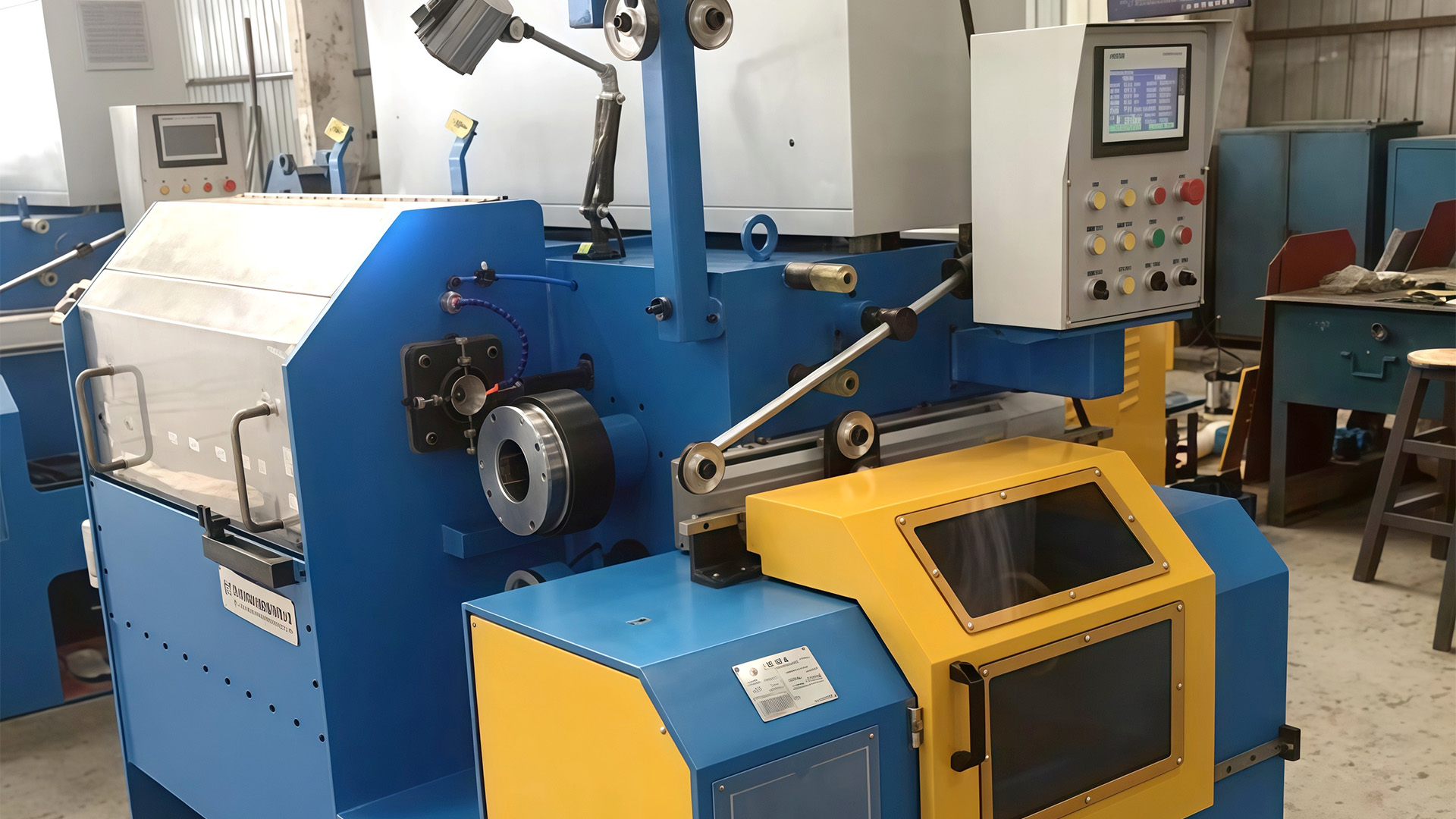
For spring production, the straight-line drawing machine is the most common answer. Its die box arrangement and capstan cooling directly affect decarburization and surface cracks. A machine such as this LZ600 integrated direct wire drawing machine is often specified for this duty class, because the inline layout keeps the pass axis straight from payoff to take-up.
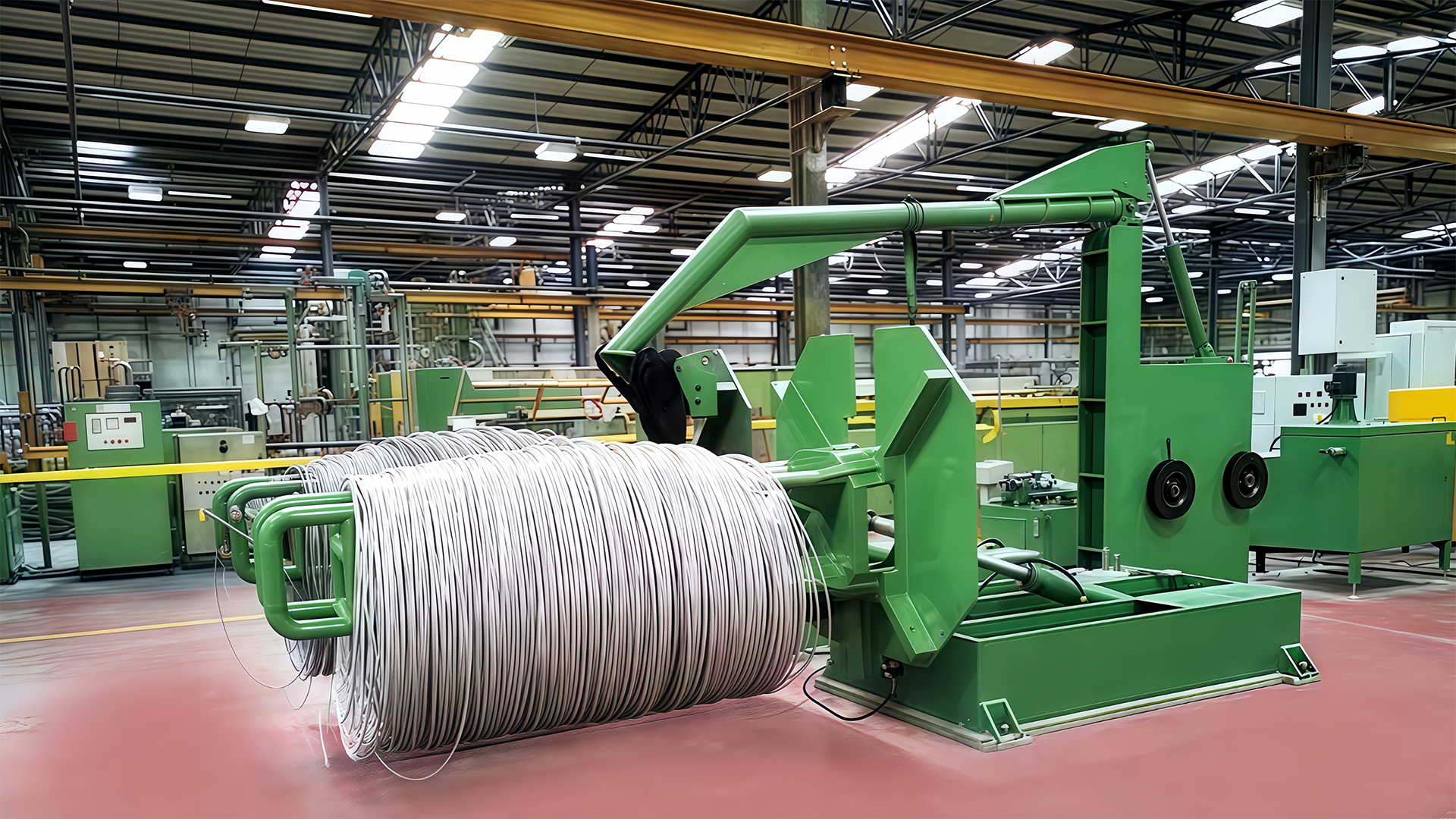
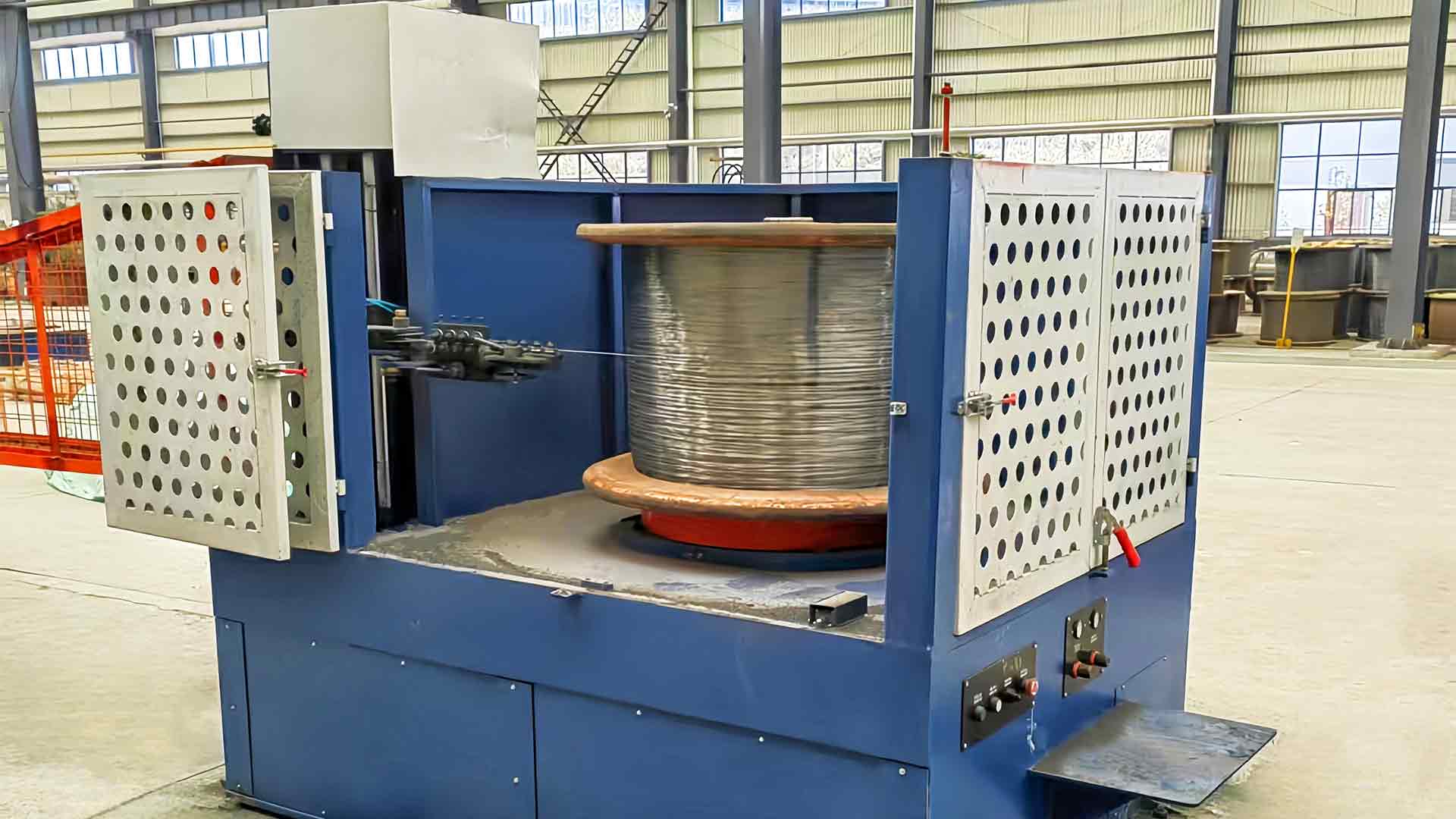
Wire rope producers usually prefer an inverted machine for large coil weights. A high-speed inverted wire drawing machine pulls the wire off the capstan vertically, so it can accumulate in heavy coils without a separate coiling head. That reduces downtime during coil change and preserves the wire's torsion quality.
Manufacturers of fencing and nails may not need the fastest line, but they need a machine that tolerates slight variations in incoming rod chemistry. Wet drawing with a water-tank machine is occasionally used for fine galvanized wire, yet dry drawing with a straight-line or pulley machine remains the standard for high-carbon applications above 1 mm.
“In practice, the application defines the machine. A spring producer worries about surface defects; a rope producer worries about torsional consistency. The same drawing machine cannot ignore either.”
Matching the Machine Type to the Application
Choosing between straight-line, inverted, pulley, and water-tank machines is not a matter of brand preference. Each layout changes the wire path, cooling, and coil handling.
| Machine type | Wire path | Best suited for | High-carbon suitability |
|---|---|---|---|
| Straight-line dry | Horizontal, consecutive dies | Springs, nails, precision wire | High — good cooling and straightness |
| Inverted vertical | Upward over a vertical capstan | Rope strand, heavy coils | High — large coil weight, low torsion |
| Pulley | Wrapped around multiple pulleys | General-purpose, lower speed | Medium — cooling is limited |
| Water-tank wet | Submerged capstans, liquid lubricant | Fine wire below 1 mm | Lower — wet lubricant temperature limit |
Within these types, the machine size and motor power should be matched to the inlet and finished diameters. A machine designed for a 6.5 mm inlet can usually draw down to 1.5 mm, but reaching 0.5 mm requires more passes, stricter cooling, and often a dedicated second machine.
Process, Risk, and the Right Configuration
Selection starts with the process route. For high-carbon rod, the typical line looks like this: rod payoff → mechanical descaling → belt grinding → borax coating and drying → straight-line drawing → spooling or inverted take-up. Each step affects how the drawing machine performs.
These warnings are not theoretical. In a high-carbon line, the cost of one broken strand is not only the scrapped wire — it is the downtime to re-thread the line and replace the die. Selecting a machine with a larger capstan diameter, hardened capstan surface, and spare die boxes reduces those events.
The Drawing Machine as Part of a Production Line
Another common context is a retrofit. Many plants already own a payoff, descaling unit, and take-up. They replace only the drawing machine. In that case, the key specifications are the capstan diameter, the number of dies, and the motor power.
A practical sequence for a high-carbon line:
- Rod payoff with tension control
- Mechanical descaling — or pickling for higher surface requirements
- Belt grinding or polishing
- Borax coating and drying tunnel
- Straight-line wire drawing machine
- Take-up: spooler, inverted block, or dead block coller
Pay attention to the take-up method. For high-carbon spring wire, spooling is common; for rope strand, an inverted take-up with pattern lay gives better coil control. The drawing machine must be configured for the take-up type from day one, because the tension profile changes.
The straight-line layout is favored because it keeps the wire axis fixed, which simplifies die alignment and points the finished wire directly at the take-up. We describe the operating principle in more depth in this guide to the straight-line wire drawing machine principle. If you are planning a new line, the complete equipment catalog for wire drawing machines gives an overview of what to combine.
Sourcing Considerations for a High-Carbon Wire Drawing Machine
Buying a high-carbon steel wire drawing machine is an investment decision. The machine's application goes beyond motor power and nominal speed:
- Capstan material. Hardened alloy steel with a ground surface avoids premature wear.
- Cooling system. Closed-loop water cooling for capstans and die holders is worth the extra cost.
- PLC and HMI readiness. Common industrial controllers shorten operator training.
- Spare parts and consumables. Dies, capstans, and lubricating powder should be available from a single supplier.
- Service. Commissioning, training, and remote diagnostics matter more than the delivery date.
If possible, visit a production line that runs the same wire range you plan to produce. Ask about the actual line speed and die life. Specification sheets can look impressive, but die temperature and tension stability reveal themselves only in operation.
The applications of high-carbon steel wire drawing machines stretch from small spring coils to multi-strand rope and prestressed reinforcement. The common thread is not the wire diameter or speed; it is the machine's ability to manage heat and tension without sacrificing the metallurgical quality of the steel. Match the machine to your product family, verify the cooling and take-up configuration, and the rest of the line will follow.