 English
 русский
 عربى
عربى

Fine Wire Drawing Machine with Annealer: In-Line Annealing for Uniform Wire Quality
A fine wire drawing machine with annealer combines high-reduction wet drawing with continuous heat treatment, so the wire stays ductile, break-free, and spool-ready from the first meter to the last.
Consider a wire mill shifting from 1.2 mm rod to 0.25 mm stainless steel wire. Within the first shift, fine steel dust appears on the capstans, and the line stops at the take-up every twenty minutes. The wire looks correct until you bend it: it springs back, cracks, or simply snaps. The drawing blocks are doing their job. The metal has simply exhausted its ductility.
The conclusion is direct: for fine wire, the annealer is part of the machine specification, not an add-on. It changes the line speed you can maintain, the tension control you need, the cooling layout, and even the number of dies you can use. If you want to revisit the fundamentals, our article on how a drawing machine transforms raw metal into fine wire explains the physics; here we focus on what changes when an annealing station sits in the same line.
Why Fine Wire Needs an Annealer in the Same Line
Cold drawing is controlled work hardening. Every die reduces the cross-section and makes the wire stronger but less ductile. At 1.0 mm this is manageable; at 0.2 mm, elongation falls to a small fraction of its original value. Hard wire breaks at the capstans, scratches inside the dies, and refuses to sit cleanly on the spool.
A batch furnace can restore ductility later, but that route creates a queue: coils wait for a furnace cycle, oxide must be pickled off, and mechanical properties vary from one coil to the next. An annealer mounted directly after the last drawing block removes the queue entirely. The wire is annealed, cooled, and spooled in one continuous pass.
Cold drawing delivers the diameter you asked for — but not the ductility you need for the next step. The annealer gives it back.
How an In-Line Annealer Works
Fine wire lines use a resistance annealer. The moving wire passes between two contact wheels, current flows through the wire itself, and electrical resistance heats it to recrystallization temperature in a fraction of a second. The wire then travels through a cooling section before the take-up spool receives it.
Temperature is controlled indirectly. Because the wire is moving, the power supply must follow the line speed — more current at higher speed, less at lower speed. On a well-integrated machine, the annealer follows the capstan speed through the PLC, so the wire receives the same heat treatment at 8 m/s as it does at 15 m/s.
The annealer is placed after the final capstan, where the wire is already dry. Contact wheels need clean, oxide-free contact to work consistently. When they are properly maintained, the result is wire soft enough to bend repeatedly and strong enough for the forming steps that follow.
| Factor | In-line annealer | Batch annealing |
|---|---|---|
| Ductility control | Uniform from spool to spool | Depends on position in the furnace load |
| Surface condition | Minimal oxide when speed and tension are controlled | Oxide and discoloration are common |
| Work in progress | None between drawing and annealing | Full coils waiting for a furnace cycle |
| Labor | No extra handling | Loading, unloading, and furnace tending |
| Continuity | Rod to spool in one pass | Separate process with stops |
Machine Configurations That Matter for Fine Wire
Fine wire is almost always drawn on a wet machine — the water tank type. The dies stay submerged in emulsion, which carries heat away from the deformation zone and keeps lubricant on the wire. Below roughly 0.4 mm, wet drawing is the standard route; without that cooling, the wire would overheat inside the dies and break.
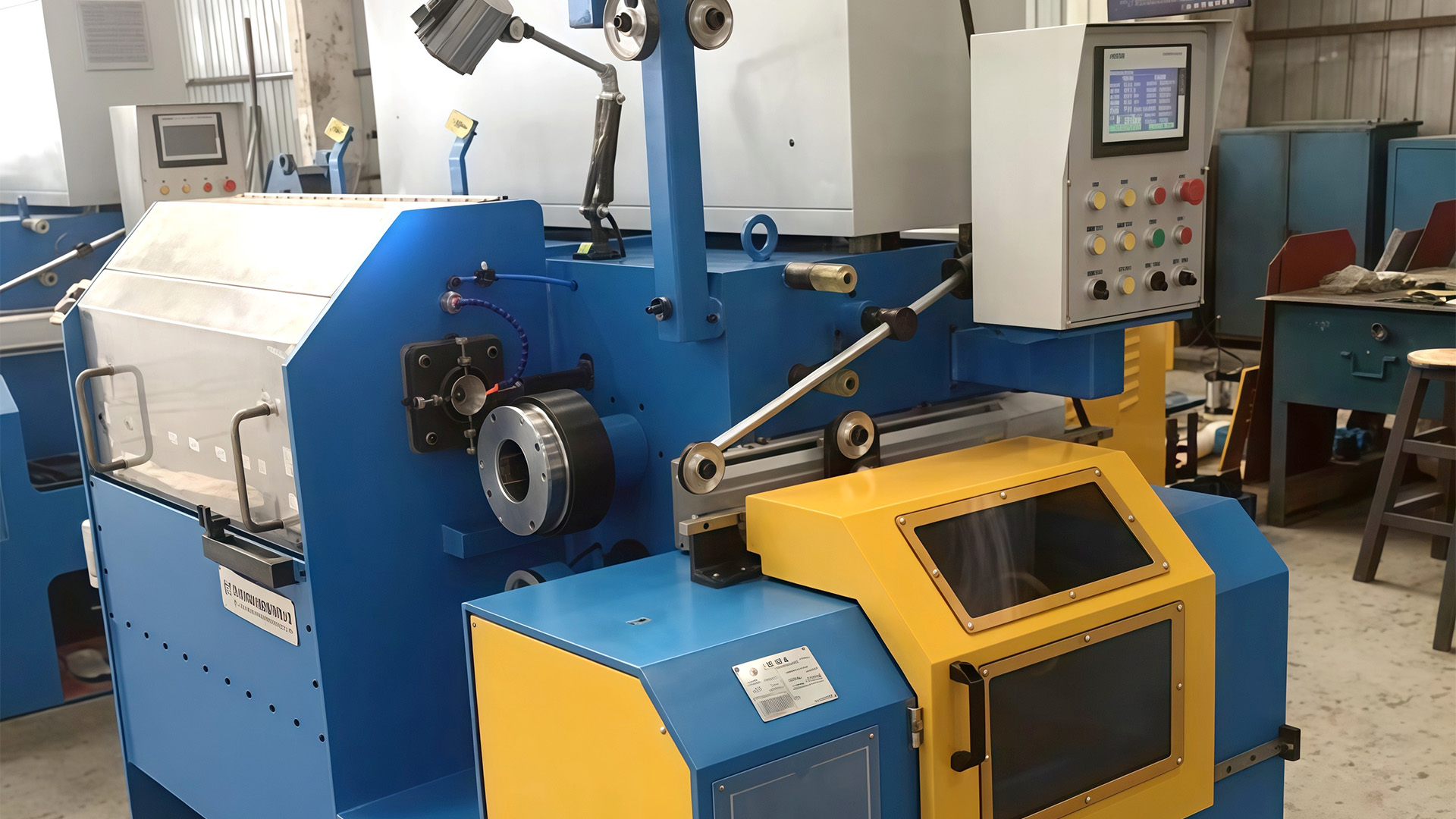
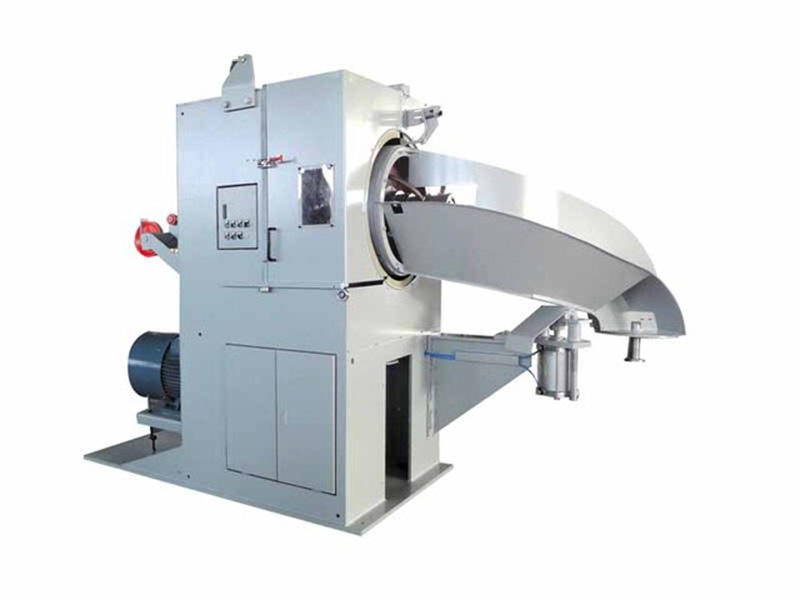 Wet Water Tank Wire Drawing Machine for Fine WireThis machine handles fine wire drawing below 0.4 mm by submerging dies in emulsion for cooling and lubrication. It fits the described line after the payoff station, where consistent cooling prevents breaks and ensures smooth surface finish.View Product →
A typical line runs from the payoff station through a straightener, then through 19 to 23 dies in the water tank machine, into the annealer, through a cooling tube, and finally onto a take-up spool with dancer-controlled tension. The die count defines the reduction schedule; the annealer position defines how much load the last capstans see — and therefore how long they last between overhauls.
Tension control is the detail that separates a polished line from a frustrating one. Annealed wire is softer and stretches slightly under tension, so a take-up that pulls too hard distorts the spool and changes the measured diameter. A dancer roller or load-cell feedback keeps tension low enough for the wire to stay round, yet high enough to wind tightly.
What to Verify Before You Buy
A fine wire drawing machine with annealer is a system, not a collection of parts. Start with the reduction schedule: does the machine have enough dies for your input and final diameters? Then check the annealer power against the maximum line speed you will run at the largest wire size in your range.
During a factory test, watch four things:
- Elongation uniformity across one full spool, from the core to the outside layers.
- Surface condition: no annealing marks, no die scratches, no visible oxide.
- Break rate at rated line speed, observed over several consecutive hours, not a single coil.
- Temperature stability of the annealer and the cooling section after a long production run.
Ask how the annealer is integrated with the machine control. Separate cabinets can work, but a synchronized line where the annealer follows capstan speed is far easier to keep consistent. If you are comparing configurations, our water tank wire drawing machines page lists the machine families built for this type of process.
Where It Pays Off: Applications
Stainless steel fine wire — used for welding wire, woven mesh, braided hose reinforcement, and cable screening — demands a clean surface and dependable ductility. If the annealer temperature swings, the wire becomes hard in some sections and soft in others, which shows up immediately during weaving or stranding.
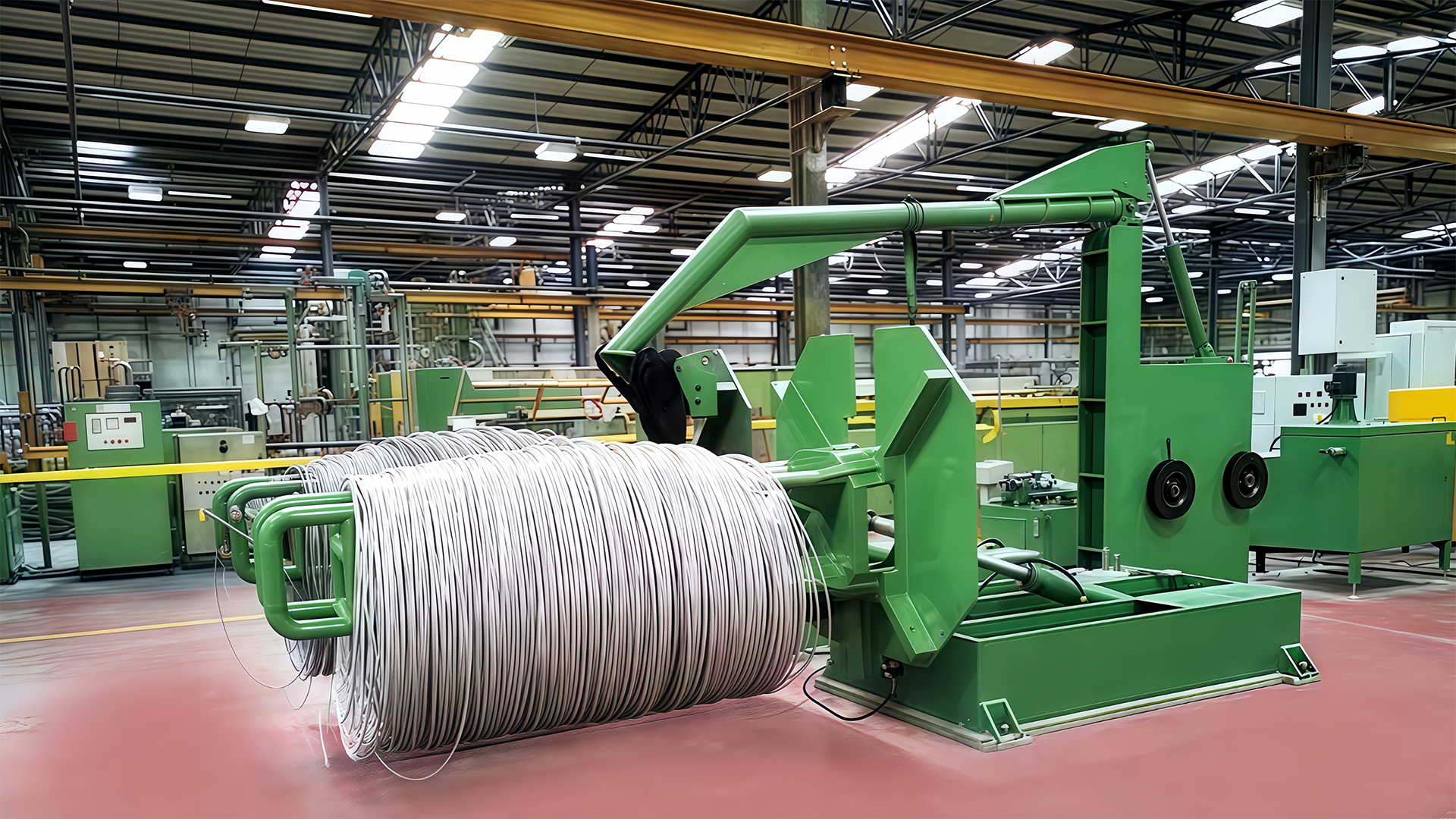
Stainless Steel Water Tank Drawing MachineStainless steel wire requires controlled annealing and clean drawing. This water tank machine cools and lubricates the hard material to minimize friction and die wear, helping maintain ductility for consistent weaving or stranding.View Product →
Low carbon steel fine wire, the raw material for nails, tie wire, and general binding wire, is a cost-per-kilogram business. Hard-drawn wire wears out forming tools and resists bending; annealed wire lets the nail former or mesh welder run at its rated speed without forced stops.
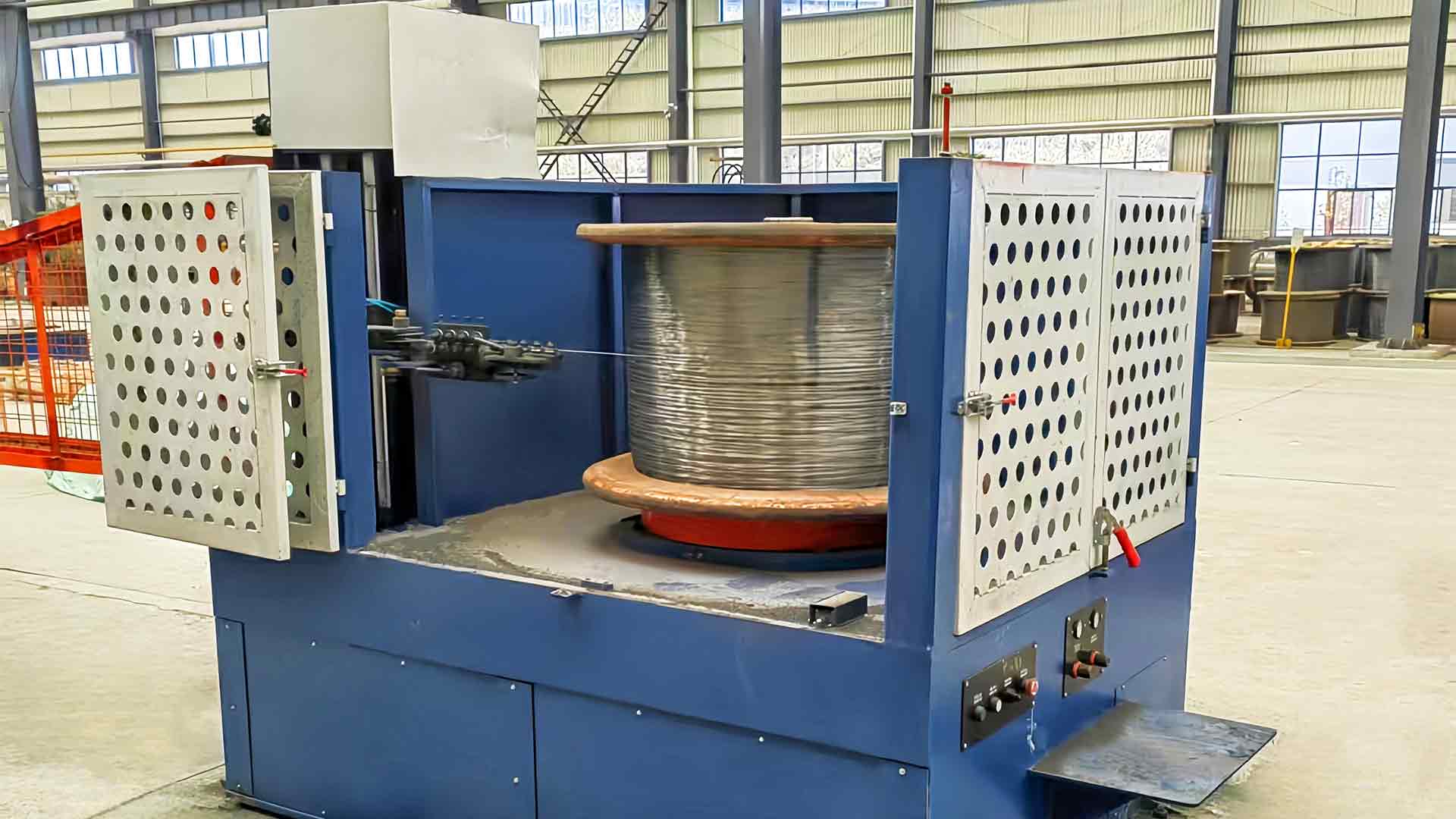
Low Carbon Steel Water Tank Wire Drawing MachineFor cost-sensitive low carbon steel wire used in nails and binding, this machine keeps temperature stable and applies lubrication to reduce die wear. It supports smooth drawing and annealed ductility, enabling faster forming without interruptions.View Product →
Aluminum-clad steel follows the same logic, with one adjustment: the annealer must be matched to the material's thermal conductivity, which differs between aluminum and steel. The principle stays identical — restore ductility, keep the surface clean, and let the next process run without interruptions.
When you evaluate a machine, start from your own production figures: input rod diameter, final wire size, material grade, and the line speed needed to reach your monthly tonnage. Then look at the line as one system — dies, capstans, annealer, cooling, and take-up — instead of a list of component names.
If the supplier allows it, run a sample with your own rod material. A machine that handles that rod at the rated speed, with uniform elongation and a clean surface, is worth more than any specification sheet. That is the machine that will produce quietly, day after day.