 English
 русский
 عربى

Functions of Inverted Vertical Wire Drawing Machines: Complete Guide
For wire mill operators and plant owners, the inverted vertical wire drawing machine answers a familiar bottleneck: how to keep the line running without stopping every few hundred kilograms to strip a full coil.
A fastener plant in Zhejiang found that its two horizontal take-up lines required a full-time operator each, almost exclusively for coil changes. After switching the same production program to an inverted vertical wire drawing machine, the operator's role changed from manual handling to supervision. The line produced heavier coils, the floor stayed cleaner, and downstream nail formers received wire with noticeably more consistent coil geometry.
The functions of an inverted vertical wire drawing machine explain that shift. This machine type combines drawing, coiling, and coil handling in one continuous process. Understanding how each function works is the first step toward deciding whether it belongs on your shop floor.
The Working Principle: Drawing, Wrapping, and Gravity Coiling in One Sequence
An inverted vertical wire drawing machine is a single-block unit with its capstan mounted vertically and inverted, meaning the working surface faces downward. The wire is pulled from a payoff, passes through a die box, and wraps around the upper portion of the capstan. After the final wrap, the wire travels down the capstan face and falls off the bottom edge onto a turntable below.
Three physical processes happen at the same time:
- Size reduction through the die, driven by the capstan's pulling force.
- Heat transfer from the wire to the water-cooled capstan surface.
- Coil accumulation on the turntable, with no mechanical stripping device.
Because the coil is laid below the machine, the capstan can keep rotating while a finished coil waits on the turntable for removal. The machine never stops for the sake of coil handling. In practice, this makes the inverted vertical design one of the most productive single-draft arrangements in a wire mill.
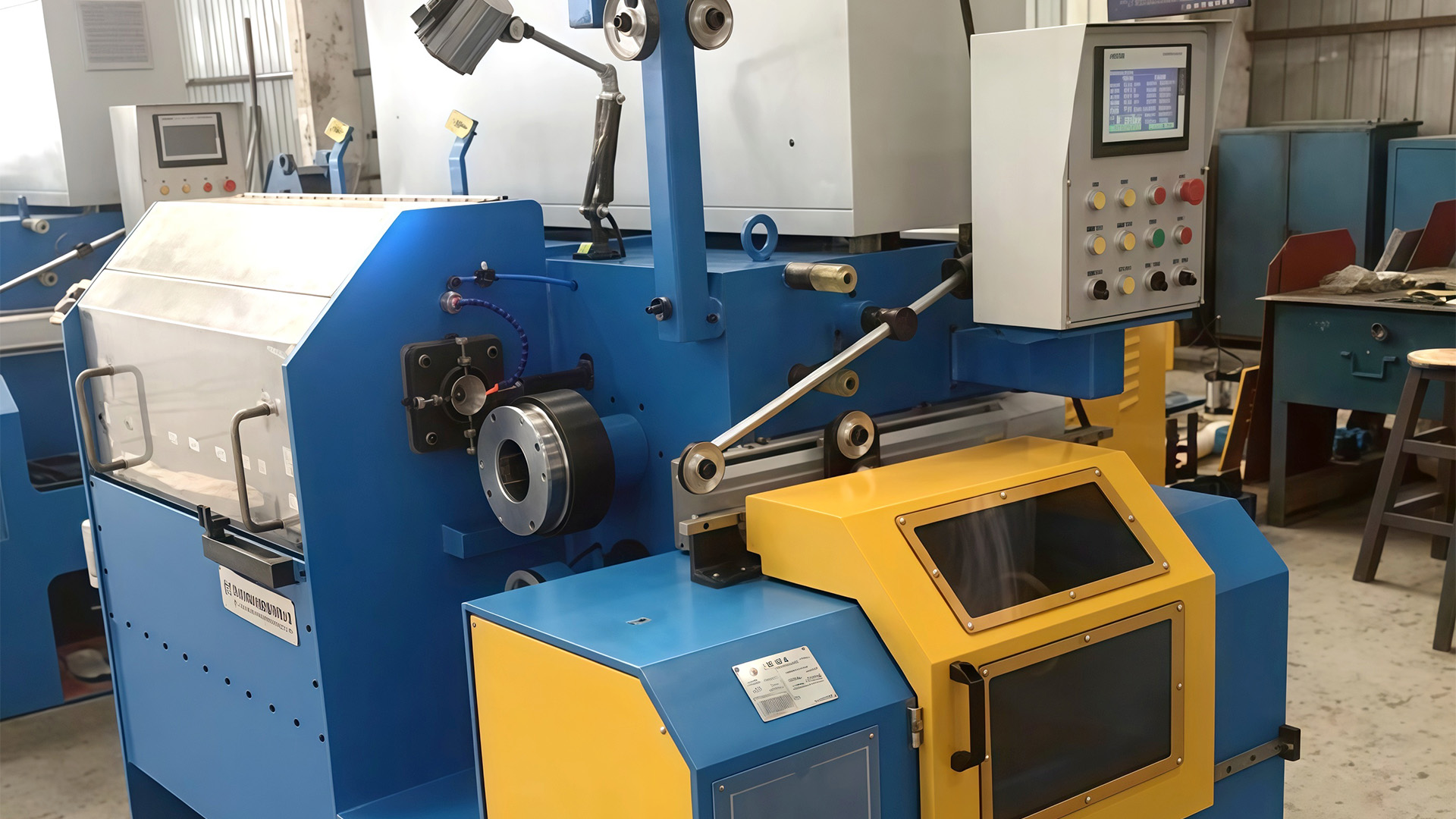
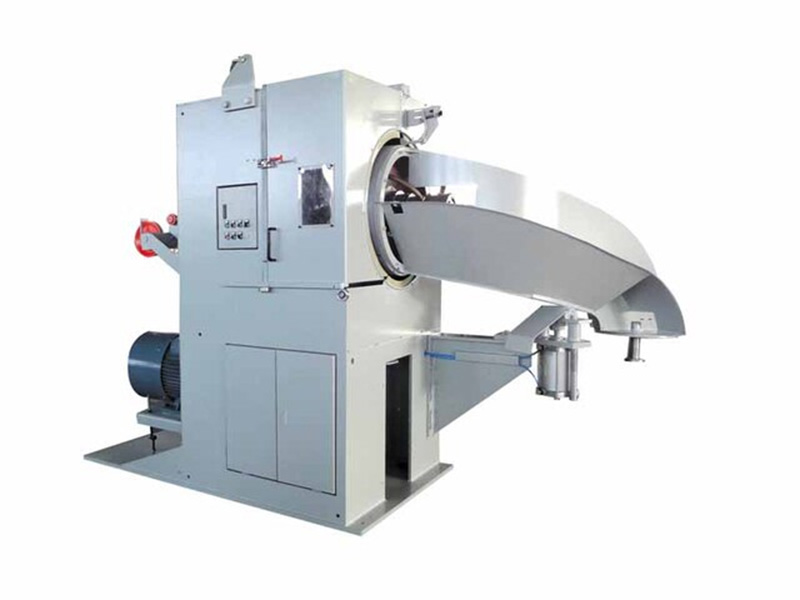 Inverted Vertical Wire Rod Drawing Machine for Continuous Coil ProductionThis gravity-assisted inverted machine keeps the capstan running while coils wait, enabling larger coil weights and fewer threading stops to reduce scrap and operator workload.View Product →
Six Core Functions That Define Its Operating Behavior
1. Continuous Coiling with Heavy Coil Masses
The take-up function is not an afterthought; it is the reason the inverted format exists. The turntable collects wire until a preset weight or coil diameter is reached, then the machine signals for removal. Depending on the model, individual coil weight can range from 500 kg to 3,000 kg or more. Fewer starts and stops mean fewer threading events, which directly reduces scrap and operator workload.
2. Gravity-Based Coil Layering
Wire falling off the capstan edge is not random. The turntable rotates and traverses in a controlled pattern, laying each wrap beside the previous one. This pattern-lay function produces a flat, stable coil with uniform density. It also prevents interlocking when the wire is later paid off into a bolt former or nail machine, a problem that causes line downtime in plants using poorly wound coils.
3. Capstan Cooling with an Integrated Water Circuit
Drawing generates heat. Without effective cooling, the capstan surface temperature climbs, the wire becomes harder to control, and the drawing lubricant breaks down. Inverted machines are generally built with water-cooled capstans and a recirculating circuit. Keeping the capstan temperature in a controlled range preserves both die life and wire surface quality.
4. Precision Tension Control During the Draw
An AC variable-frequency drive matches the capstan speed to the payoff speed, creating the tension needed for consistent elongation. On machines with a dancer roller or load cell, tension feedback fine-tunes the speed in real time. The result is a more reproducible final diameter, even when the incoming rod hardness varies from coil to coil.
5. PLC-Driven Process Automation
Most modern inverted machines link drawing speed, coil counting, and safety interlocks to a programmable logic controller. Operators set the target coil weight and finished diameter, and the machine takes over from there. Data logging also lets supervisors see how many coils were produced per shift and whether the line is hitting its planned output rate.
6. Accessible Layout for Quick Changeovers
The inverted configuration provides clear access to the die box, capstan, and turntable from a single side. For plants that process multiple wire diameters, the time needed to change the die and reset the capstan speed is shorter than on many horizontal or dancer-type machines.
Functions at a Glance: System-Level Breakdown
To make the comparison easier, the table below summarizes the main functions at the system level and shows what each one means for production performance.
| Function | Mechanism | Production Impact |
|---|---|---|
| Continuous draw and coil | Inverted capstan with rotating turntable | No line stop for coil stripping; higher utilization |
| Gravity coil drop | Free fall from capstan lower edge | No stripper mechanism; fewer moving parts |
| Pattern-lay turntable | Independent turntable motor with orbital motion | Flat, stable coils; no interlocking at payoff |
| Capstan cooling | Water-cooled capstan and die box | Stable drawing temperature; longer die life |
| Tension control | PLC and variable-frequency drive regulation | Consistent elongation; fewer wire breaks |
| Coil weight control | PLC counter with preset limits | Predictable logistics; better yield tracking |
A wire drawing machine is judged not by the maximum speed in its brochure, but by the number of hours it runs without requiring an operator's hands.
How It Compares with Straight-Through Drawing Machines
A straight-line wire drawing machine pulls wire through multiple dies in a horizontal line and collects it on a spool or block. It is the right choice for multi-pass schedules where a long continuous path is available and where intermediate annealing is part of the process. But when the production program is a single reduction, for example 6.5 mm low-carbon rod down to 4.0 mm wire for nail making, a multi-pass straight machine may be more machinery than the job requires.
The inverted vertical machine is simpler because it is designed for one pass, yet it compensates with higher coil density and continuous operation. You get heavier coils, cleaner wire surfaces, and fewer contact points. For fastener and nail producers that need a steady feed of coiled wire, the inverted design aligns better with downstream processes.
Where the Machine Earns Its Keep: Practical Applications
Four application groups dominate the demand for inverted vertical wire drawing machines:
- Fastener manufacturing: drawing 5.5–8.0 mm rod down to the wire diameter required by bolt makers and cold headers.
- Nail production: producing uniform coils of 2.5–4.5 mm wire for automatic nail collers.
- Wire mesh and fencing: supplying consistent wire for mesh welders and chain-link looms.
- Pre-stressed and high-carbon wire: controlled single-pass reduction for applications requiring predictable elongation and high coil integrity.
In each setting, the machine's core value stays the same: it takes rod at one diameter, delivers a coil at a smaller diameter, and does so continuously with minimal manual attention.
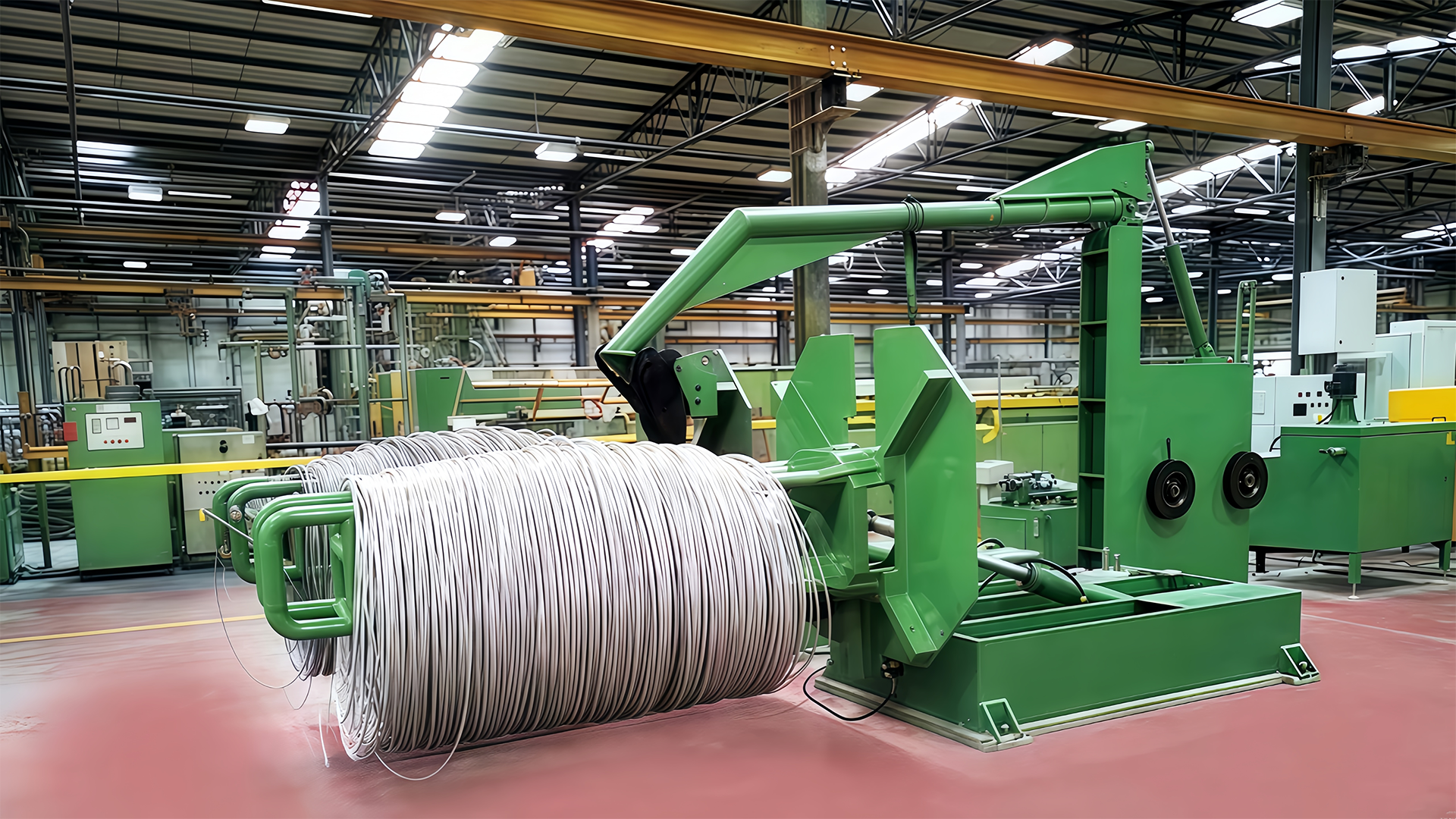
High-Speed Inverted Wire Drawing Machine for Automated MillsDesigned for high automation and minimal downtime, this machine pairs precise die control with uniform output, making it essential for factories prioritizing productivity.View Product →What to Check Before You Buy
Five parameters determine whether an inverted machine will match your production plan:
- Inlet rod diameter: the maximum rod size the machine can accept, usually 12 mm or 6.5 mm depending on the model.
- Final wire range: the diameter range the die box and capstan are designed for, such as 1.2–5.0 mm.
- Maximum drawing speed: commonly 400–800 m/min, which directly sets throughput.
- Coil weight capacity: from 500 kg to over 3 tonnes; more capacity reduces changeover frequency.
- Motor power and reduction ratio: must match the tensile strength of the material and the required reduction per pass.
These values are interconnected. A machine specified for 12 mm rod will not be economical at 1.5 mm final wire, and a high brochure speed assumes an ideal die schedule and lubrication condition. Discuss your actual rod source and finished wire specification with the equipment manufacturer before you commit.
Two operational points deserve attention after installation. Die wear is normal, but if the machine's cooling flow or lubrication is undersized, wear accelerates sharply and the wire surface quality drops. Coil pattern problems usually show up as uneven layers or collapsed edges, and both can be traced back to turntable speed programming or capstan alignment. For a detailed troubleshooting guide, see this article on wire drawing machine operational problems.
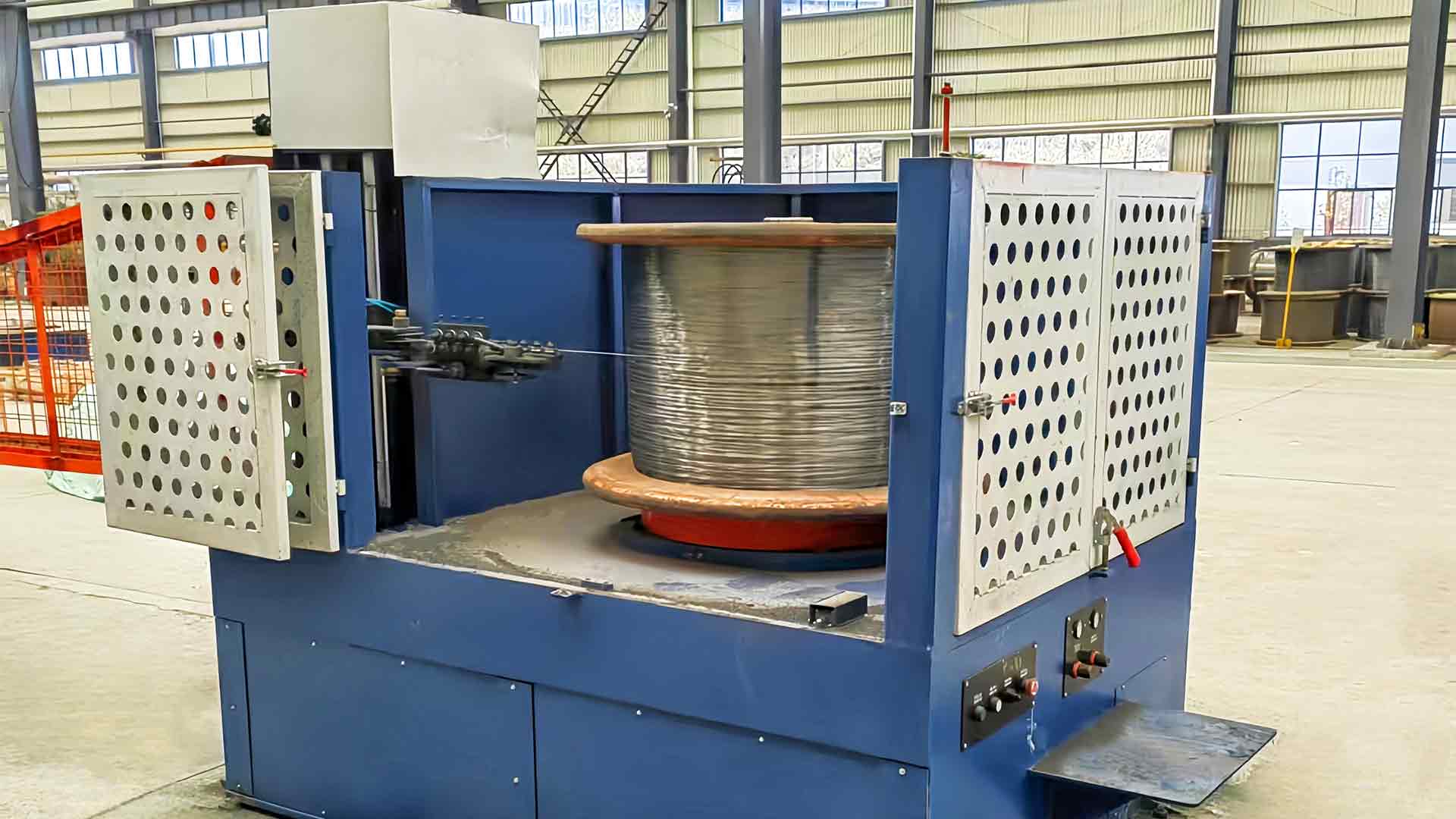
Single Channel Inverted Wire Drawing Machine with Gravity-Assisted Take-UpThis space-saving inverted unit simplifies maintenance and die life through downward drawing, while its PLC and cooling systems support stable high-speed operation.View Product →The Bottom Line
The functions of an inverted vertical wire drawing machine are built around one objective: maximizing productive drawing time while minimizing manual coil handling. Its gravity-assisted take-up eliminates the stripper mechanism, the pattern-lay turntable produces coils that downstream equipment can process without interruption, and the integrated cooling and PLC controls keep the process stable at speed.
If your plant runs single-pass reductions and struggles with coil-handling labor or unplanned stops, this is the design to evaluate. The machine's real strength is not any single function in isolation. It is how those functions work together to keep the wire moving, coil after coil.