 English
 русский
 عربى

Walk through a drawing shop at the end of a shift and you can usually tell how a high-carbon line is running before anyone opens the control panel. The lubricant is still clear, the packages coming off the take-up are firm and even, and there is no blue-tinted spray drying around the die holders. A machine can be running fast and still be failing. That gap between speed and performance is the part no brochure figure captures.
We have been building drawing equipment in Wuxi for a long time. The company that became Jinding Technology grew out of a small family workshop in the 1990s, and the machines we ship today still carry lessons from those first installations, along with more than 550 lines now running in over 40 countries. What follows is how we explain performance to customers choosing a high-carbon wet line — or trying to get more out of the one already standing on their floor.
Why high-carbon wire asks more of a wet line
High-carbon rod arrives at the machine patented: a fine pearlitic structure, a tensile tuned at the wire mill, and a thin brass or phosphate carrier coating that exists for one reason — to hold lubricant at the die. Everything the drawing line does from that point is a negotiation with work hardening. Each pass turns pull force into heat and dislocation density, so the wire gets stronger, less ductile and considerably less forgiving.
At 0.8% carbon and above, that forgiveness runs out quickly. Push a reduction beyond what the structure can absorb and the failure does not always happen where you would expect it. It surfaces later as a central burst, a cup-and-cone break on the capstan, or a tensile result that drifts out of the customer's window three days after the coil was packed.
Wet drawing is the industry's answer to the heat problem. Flooding blocks and dies with lubricant removes heat far faster than air ever could, which is why wet machines hold 1,000 m/min and above where dry lines have to back off. The cooling circuit, though, is only as good as the discipline around it. When lubricant temperature climbs five degrees above set point, film strength drops, friction rises, and the extra heat goes straight back into the wire. Nothing on the machine has changed, but the performance has.
The levers that actually move performance
Pass schedule and reduction per die
Nothing shapes high-carbon results more than the reduction sequence. A schedule that suits mild steel — generous bites, few dies — will break high-carbon wire before the third block. Most wet lines for this duty work in the 15–25% area reduction range per pass and taper toward the finishing dies, where surface quality and diameter tolerance matter more than bulk reduction. Approach angle, bearing length and back tension belong to that same calculation; they are not independent settings.
Slip control between blocks
On slip-type machines the wire is drawn slightly faster than the capstan it leaves, and that small difference is what keeps the line in tension. It is also where errors accumulate: a two percent drift in one block becomes die wear everywhere downstream, plus ovality the customer notices before we do. Servo direct-drive blocks, individually driven and electronically geared, earn their cost on high-carbon work precisely because the speed ratio holds instead of drifting with load and temperature.
Cooling, lubricant and filtration
Wet lubricant is a working fluid, not a convenient coolant. Concentration, pH, saponification value and, above all, fines content decide whether a film survives the pressure at the die. Temperature is the variable we watch hardest. In most shops, 35–45 °C is the band where the film behaves predictably, and a plate heat exchanger with a decent settling and filtration loop will hold that band far more reliably than simply adding more lubricant when things feel hot.
Three more factors sit just behind those, and they are the ones most often treated as afterthoughts:
- Die practice — carbide grade, approach angle and bearing length matched to the wire, with diamond dies reserved for the finest sizes.
- Tension and loop control — a steady payoff tension stops diameter variation before it starts.
- Take-up and spooling — enough tension for a firm package, never so much that the wire yields on the drum.
- Condition monitoring — coolant pressure, die-box temperature and break detection tell you more about performance than any speed readout.
Performance benchmarks at a glance
The bands below are what we see on healthy high-carbon wet lines. Treat them as the opening of a conversation about a specific grade, coating and finished diameter, not as a universal specification.
| Parameter | Typical working band | What it drives |
|---|---|---|
| Inlet rod diameter | 5.5 – 8.0 mm | Number of dies and overall machine length |
| Area reduction per pass | 15 – 25%, tapering at the finish | Risk of central bursts and mid-coil breaks |
| Drawing speed | 600 – 1,200 m/min | Output per shift, balanced against cooling capacity |
| Wet lubricant temperature | 35 – 45 °C | Film strength and die life |
| Slip between blocks | 2 – 6% on slip-type machines | Die wear rate and surface finish |
| Take-up tension | Lowest value that still forms a firm package | Package density and wire straightness |
| Break rate | Below one break per ten tonnes drawn | The only honest performance figure on the sheet |
Matching the machine to the duty, rather than to the fastest quoted speed, is where most of the gain sits. A compact horizontal layout often makes more sense than a long heavy-duty block when batch sizes are moderate and floor space is tight.
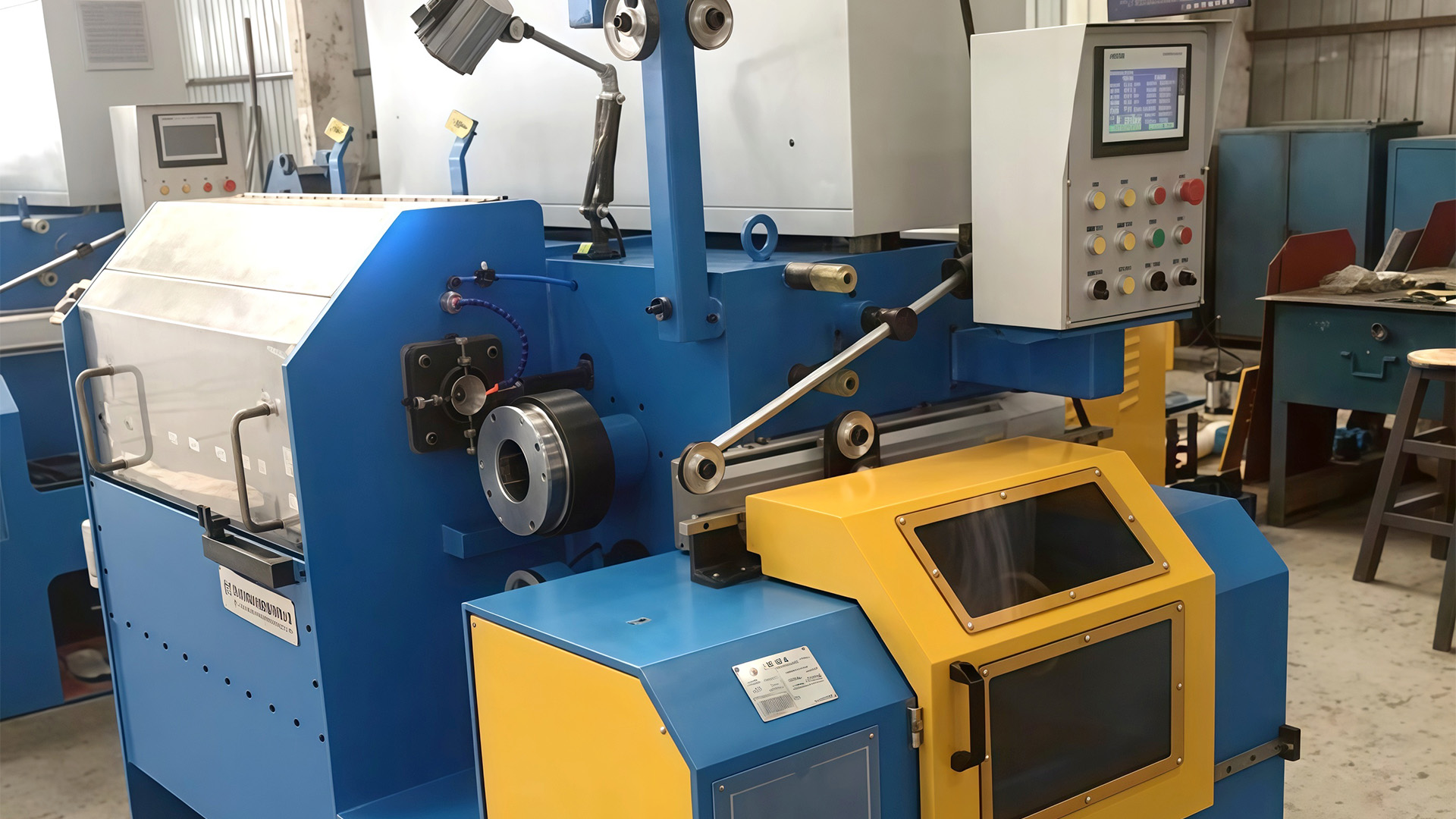
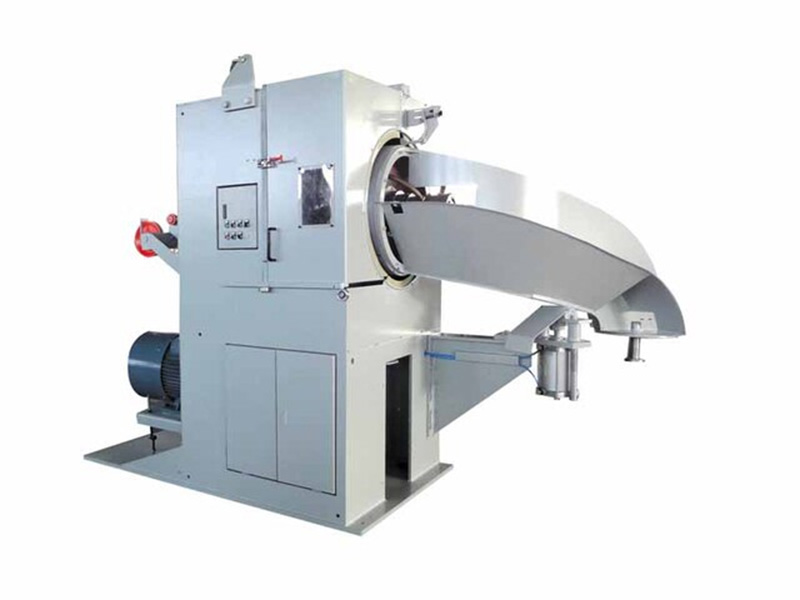 Horizontal Water Tank Wire Drawing Machine for Compact LayoutsA horizontal water tank wire drawing machine with circulating coolant and easier maintenance, suited to moderate batches where floor space is tight.View Product →
Where lines quietly lose performance
Performance rarely collapses. It erodes. A line that ran 1,050 m/min in spring is running 900 by autumn, and nobody can point to the day it changed. In our experience the slide usually starts in one of four places: lubricant temperature creeping up as ambient conditions shift, filter differential pressure rising unnoticed, capstan grooves wearing into a slightly different profile, or a die box that has been re-shimmed one time too many.
Watch for: packages that feel warm when they come off the take-up, a faint scorched smell near the finishing blocks, or diameter readings that drift across a coil instead of jumping. All three point to heat and friction long before they appear as breaks.
When a line does break, the cause is usually findable and almost always cheaper to correct than the production time it costs. We keep a practical walkthrough of the problems that show up in wire drawing machine operation for exactly that reason, and most of what is in it comes from customer calls rather than a textbook.
Die condition deserves its own mention, because it is the cheapest variable to control and the fastest to degrade. A chipped bearing, a polished pressure face or an approach angle that no longer suits the coating will cost you more in scrap than a die ever costs to replace. Keeping a matched set of carbide dies for each product family, and retiring them on measured bore rather than on gut feel, quietly protects everything else on the line.
Tungsten Carbide Wire Drawing Dies for Precision DrawingPrecision tungsten carbide dies help maintain wire dimensional accuracy and surface finish while withstanding the pressure and friction of drawing.View Product →
The platform underneath matters too, and in a quieter way than most buyers expect. Heavy continuous high-carbon duty rewards a machine with generous lubricant volume, stiff blocks and drives that hold ratio under load — the sort of wet block built to run three shifts without the settings wandering. Smaller, steadier production often does better on a tighter, simpler frame that is easy to service and quick to change over.
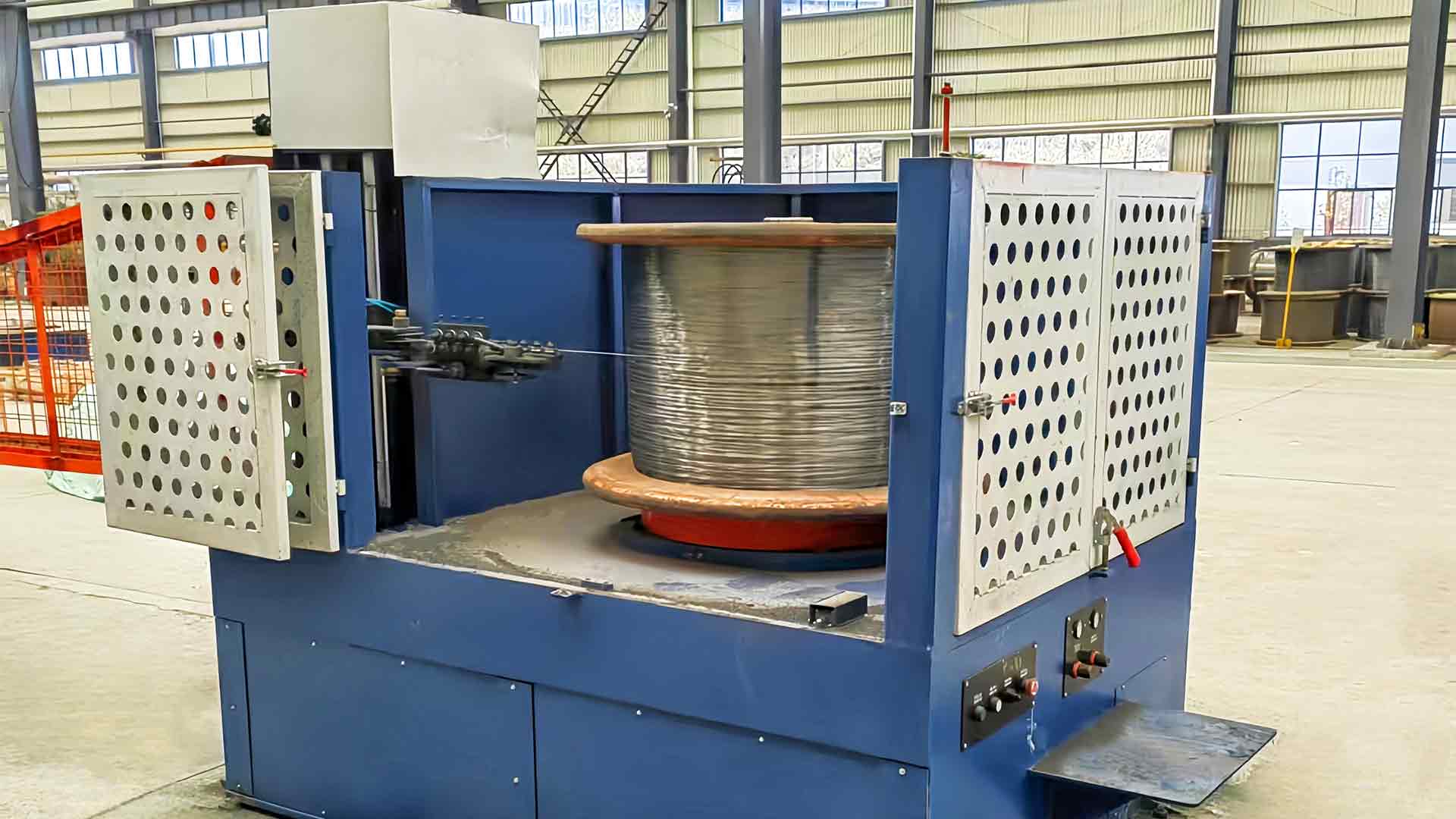
Wet Water Tank Wire Drawing Machine with Continuous CoolingA wet wire drawing machine that continuously applies coolant to reduce friction and die wear while supporting surface finish and consistent wire quality.View Product →Payoff and take-up are part of the drawing line
A drawing block does not run in isolation, however good it is. The payoff sets the back tension, and a coil that pays off in surges shows up as diameter scatter that no die schedule can fix. The take-up decides package quality, and a poorly set spooler will flatten wire that left the last die perfectly round.
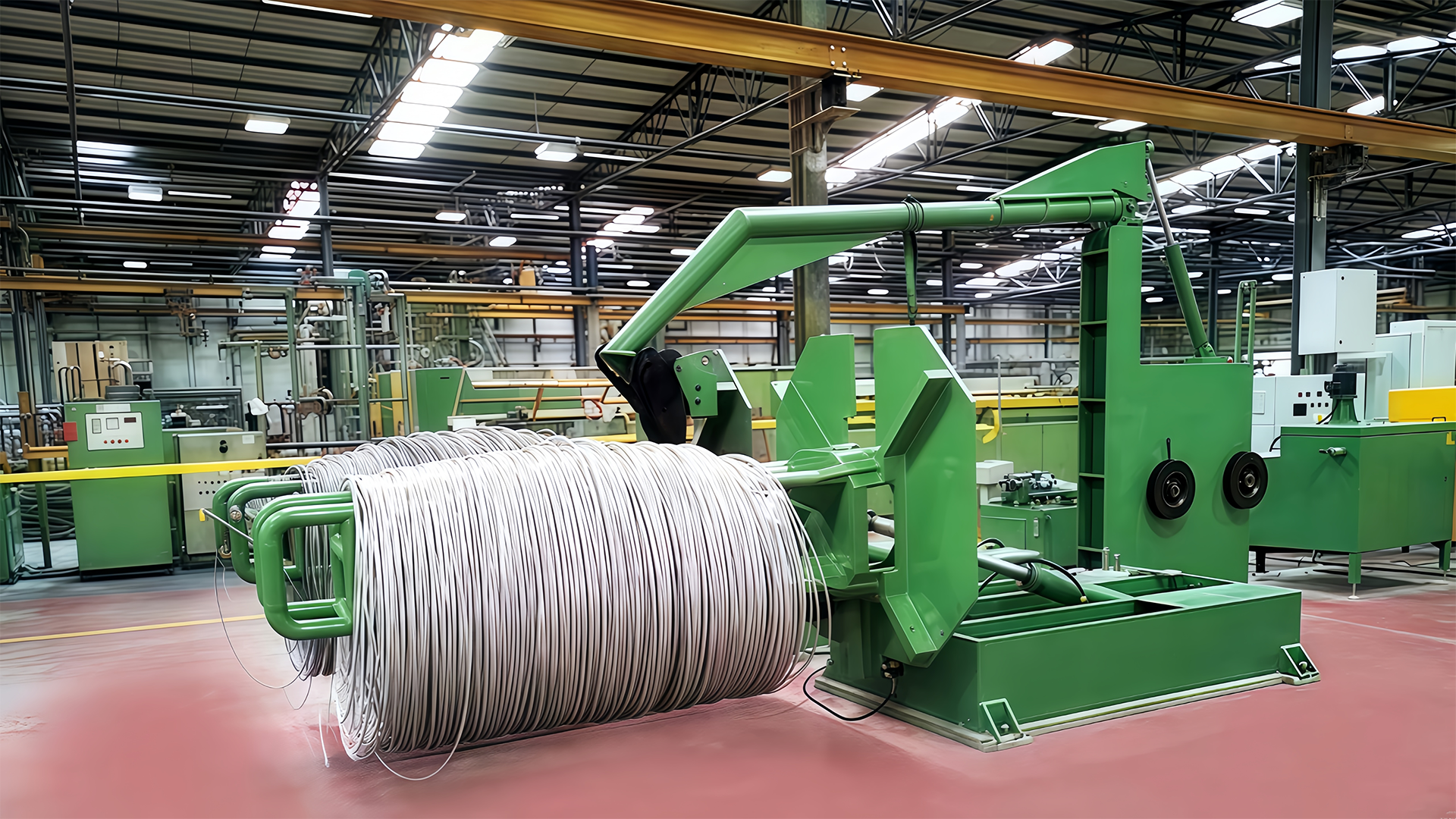
We spend as much time on these two ends as on the block itself. Flip-type overhead payoff stands and tension-controlled stands exist to hold back tension steady as the coil unwinds; spoolers, plum-blossom frames and elephant-trunk winders exist to put finished wire away without twisting it. When a customer tells us their line "runs better some days than others", the answer is more often in the payoff than in the die box.
“A line that runs 1,200 m/min and breaks twice a shift is slower than one that runs 900 and never stops. We would rather sell the second line.”
That is the view from our own commissioning engineers, and it is a useful filter when you are reading specifications. The full range of wire drawing lines and supporting equipment we build is organised around that idea, from payoff through drawing to spooling and packing.
A checklist worth carrying into the plant
- Ask for a pass schedule drawn up for your grade, coating and finished diameter — not a generic one borrowed from another product.
- Confirm the cooling circuit: heat exchanger capacity, tank volume, filtration grade and how fines are removed.
- Watch the machine run at rated speed for at least an hour, then feel the lubricant temperature yourself.
- Inspect capstan grooves and die boxes on any used machine before the conversation turns to price.
- Put break rate and diameter tolerance in writing; those two numbers are the performance you are actually buying.
- Plan commissioning with the people who will run the line, not only with management. The setup knowledge is part of the deliverable.
What good performance looks like in the end
Performance in high-carbon wet drawing is not a property of the machine alone. It is what happens when a sensible pass schedule meets stable cooling, clean lubricant, well-matched dies and a take-up that does not fight the block. Get those aligned and the speed figure takes care of itself; get them wrong and no amount of horsepower will hide it.
The encouraging part is that nearly all of it is measurable and most of it is adjustable on an existing line. If you are specifying new equipment, or trying to recover output from a machine that has quietly slowed down over the last two years, we are always glad to go through the numbers with you — usually starting with the simplest question of all: what does your break log say?
A habit worth keeping: log lubricant temperature, break count and average line speed every shift for one month. The trend line will tell you more about real performance than any single test run ever will.