 English
 русский
 عربى
عربى

Heavy rod coils, cramped workshops, and crane-dependent coil changes are the quiet friction of wire production. The inverted vertical layout was designed to remove that friction at the source — one machine, one pass, and gravity doing the heaviest work.
Ask anyone who has stripped a heavy coil off a horizontal bull block and they will describe the same routine: hook the coil, lift it, swing it clear of the drum, set it down, then re-stack it so it pays off cleanly at the next station. Every step costs minutes, ties up lifting gear, and puts a worker beside a swinging load.
The inverted vertical wire drawing machine was engineered to delete that routine. Its capstan sits beneath the coiling position, so the drawn wire builds a coil that releases by gravity onto a movable wagon — no stripping bar, no hook, no second handling. That single layout decision drives most of the advantages explained below: lighter labor, larger coils, a smaller footprint, and a cleaner wire surface. Here is how each benefit works in practice, and where this machine type is the right investment.
How the inverted vertical layout works
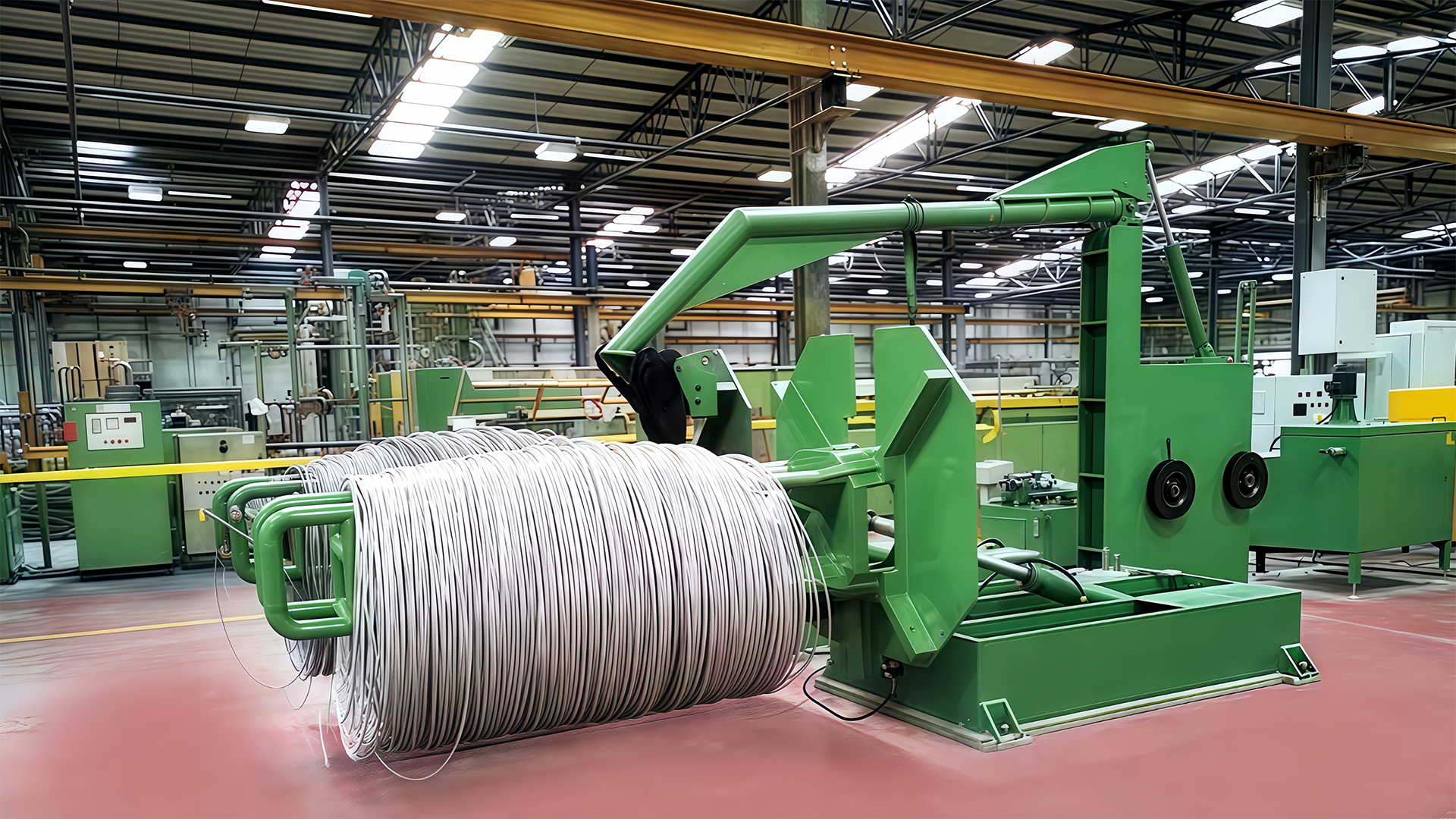
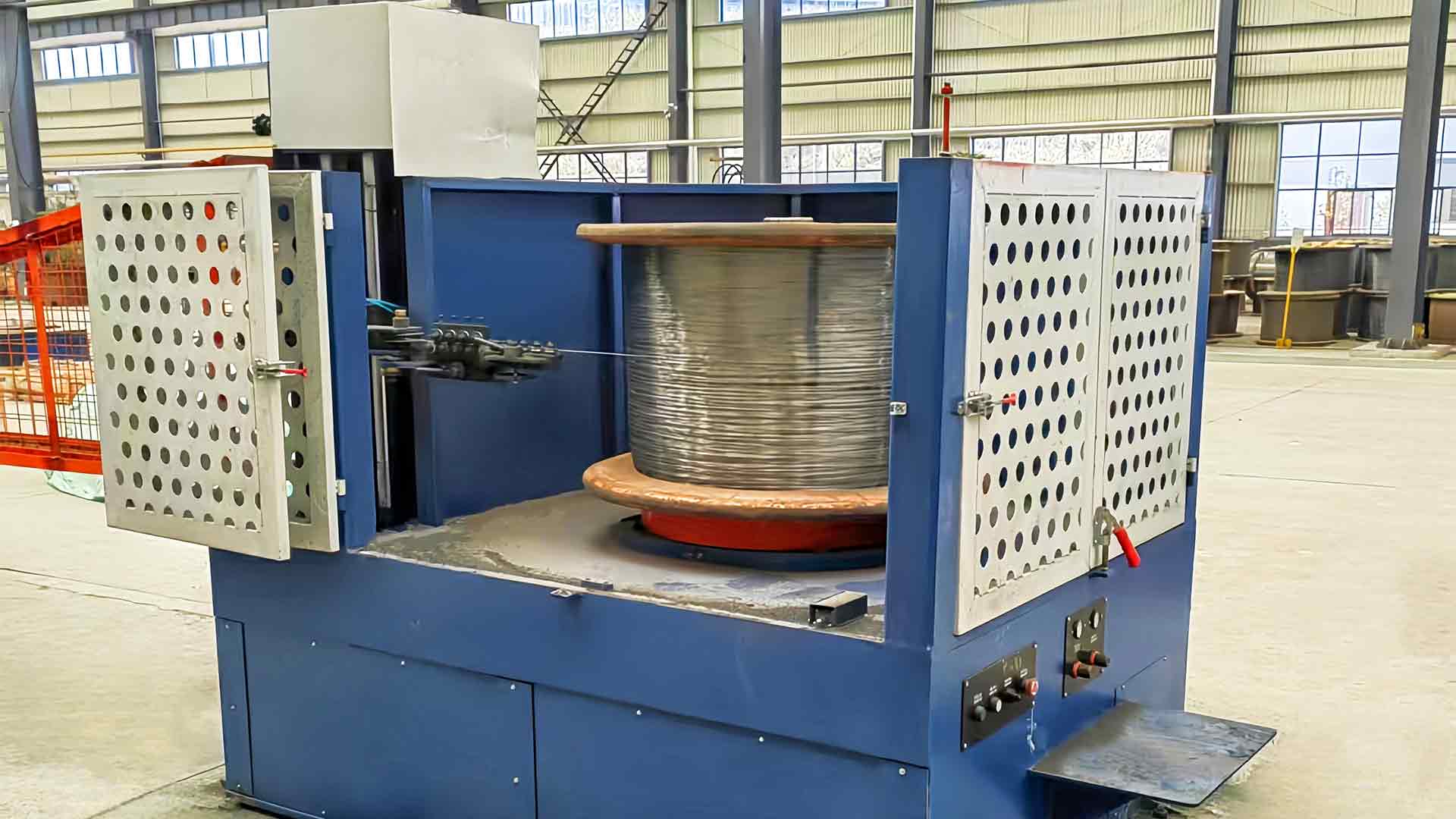
In an inverted vertical machine, the drawing capstan is mounted so its working face points down toward the coiling area. Wire enters from the payoff, passes through the die box, wraps the capstan, and winds into a coil on a former carried by a movable wagon. When the coil reaches its set weight, the finished coil drops free and the wagon rolls it out — "inverted" refers precisely to this reversal of the usual coil position.
Because drawing and coiling happen along one vertical line, the machine needs no separate stripper, coil lifter, or dedicated spooler. Most builds are also single-draft designs: one pass takes hot-rolled rod down to the target size. That is why the type is so common as the only drawing machine in a compact plant, or as the breakdown stage feeding further processing.
Single-draft reality check. An inverted vertical machine normally reduces rod to wire in one pass per die. If your product needs several successive reductions, plan the line with additional passes or a matching multi-draft machine instead of expecting one unit to cover everything.
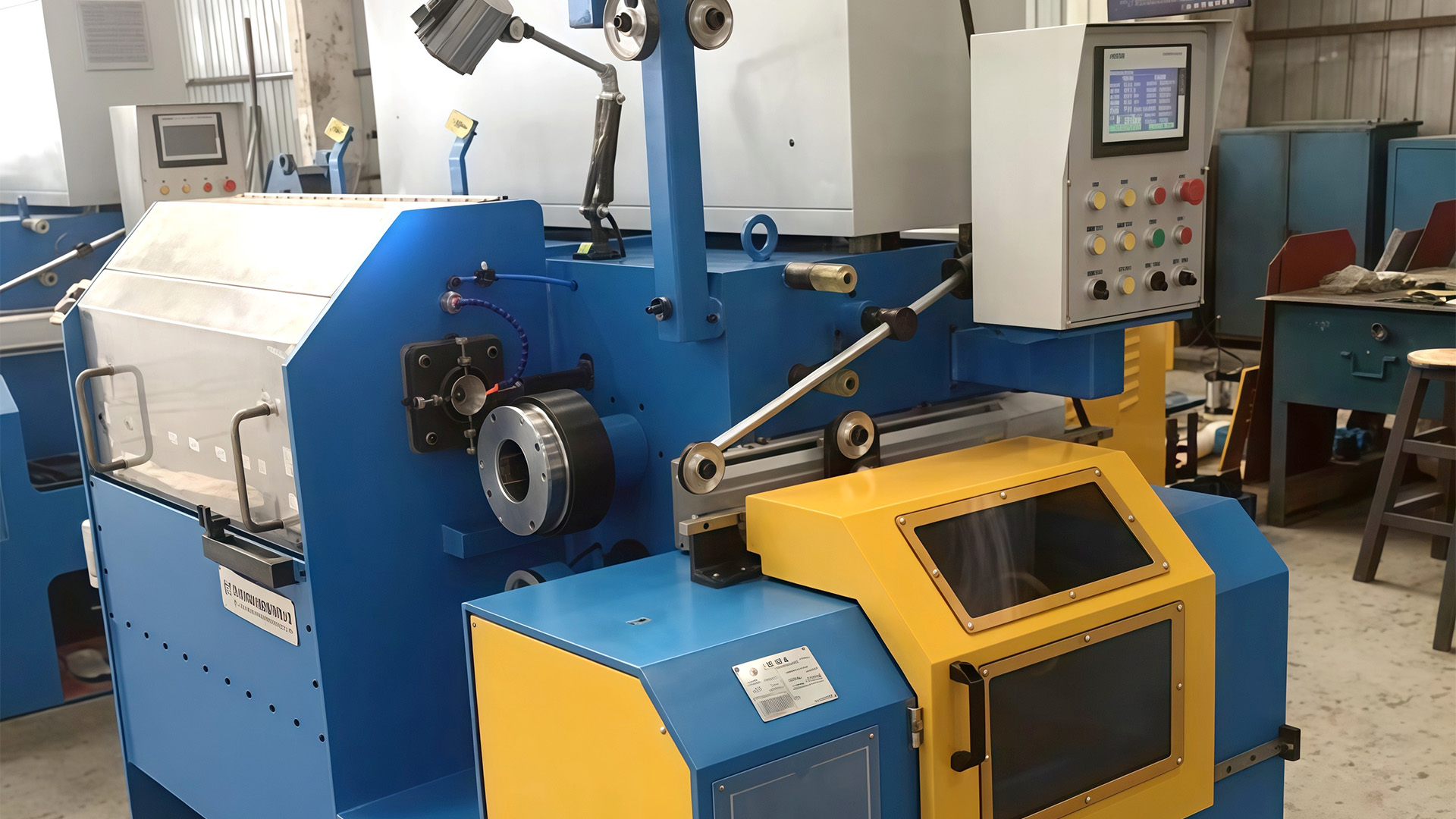
A reference build of this layout — a dedicated vertical rod-drawing unit with gravity coil release — is the machine type this article focuses on.
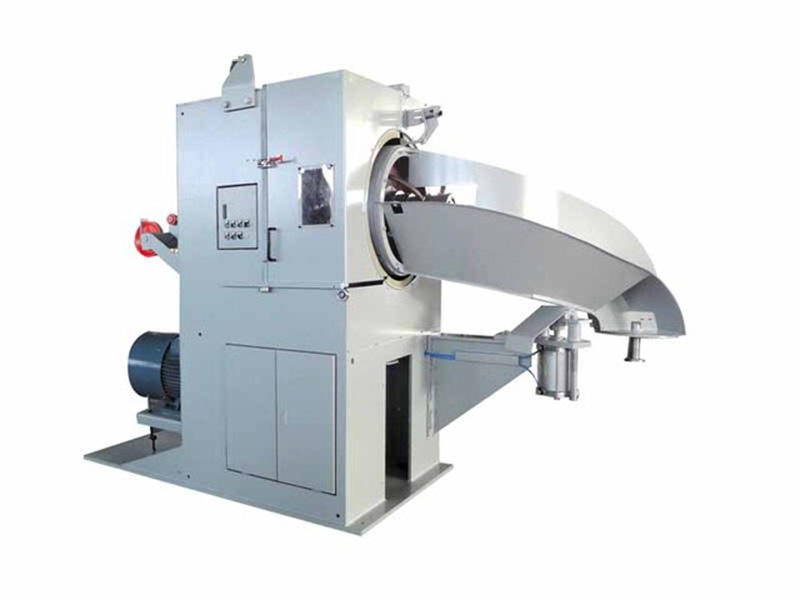 Inverted Vertical Wire Rod Drawing MachineDraws rod downward through dies using gravity, so finished coils drop onto a wagon for quick one-person removal. This reference build illustrates the layout the article describes for faster, lower-strain coil changes.View Product →
The advantages, one by one
No stripping, no crane — the coil change collapses into one motion
On a horizontal block, coil removal is manual work with a tool. On an inverted vertical machine, the finished coil falls onto its wagon under its own weight and the operator rolls it clear. A task that once took two people and lifting gear becomes a one-person job measured in seconds, and across a shift of repeated coil changes, that difference compounds into hours of recovered production time.
Heavier coils, fewer interruptions
Because gravity rather than muscle handles the coil, practical coil weight is limited by machine design instead of by what a crew can safely lift. Heavier coils mean fewer stops per tonne, fewer welds, and longer uninterrupted feeds into downstream equipment such as nail machines and mesh weavers — both of which reward a steady, tangle-free wire supply.
A compact, floor-friendly footprint
The vertical stack of die, capstan, and coiler occupies a small plan area, and the heavy coil is built and released at floor level. Traditional vertical-spindle blocks lift the coil high into the air; the inverted arrangement keeps the mass low, so workshops with modest headroom can often install the machine without civil work.
The best coil change is the one your operator never makes — in an inverted vertical line, gravity and geometry do the lifting, and the machine resets itself for the next pass.
Cleaner surface and tidier coil lay
Wire on an inverted vertical machine is never dragged across a spool wall or scraped by a stripper. The coil forms in a controlled pattern and drops free, which lowers the risk of scratches and die marks on the drawn surface and produces a coil that pays off predictably in the next process.
Lower labor cost and safer handling
Removing the crane lift removes the riskiest routine task in rod drawing. It also allows one operator to supervise drawing, coiling, and wagon movement at the same time — a direct saving for small and mid-sized plants, where headcount per line decides operating cost.
Where it fits in the plant
Inverted vertical machines earn their place wherever rod-level drawing meets heavy coils:
- Low-carbon wire production, where rod is drawn in a single pass into tying wire, nail feedstock, or mesh feedstock.
- Nail and fastener plants that want the drawing stage to supply long, uniform coils straight to the nail line.
- Workshops drawing medium-carbon or alloy rod grades, where surface quality and coil integrity matter at the next process.
- Plants with limited floor space or no overhead lifting, where a self-unloading drawing machine removes cranes from the drawing stage altogether.
The machine also shapes the surrounding line. Incoming rod must be pointed and butt-welded for continuous running, and pickling or phosphating upstream protects both dies and surface quality. Downstream, wagon-borne coils transfer cleanly to take-up units or directly into a nail line's straightening and cutting stage. Where the priority is drawing speed on top of these handling gains, a high-speed inverted build raises the drawing rate while keeping the same gravity-release coiling.
Inverted High Speed Wire Drawing MachineCombines the gravity-release inverted design with a faster drawing rate, keeping precision and surface quality at higher throughput. Relevant here where drawing speed is the priority alongside easier coil handling.View Product →Choosing between the main drawing machine types
No layout wins every job. The table below summarizes where the inverted vertical design stands against the two alternatives most often quoted at the rod-drawing stage.
| Aspect | Inverted vertical | Horizontal single block | Straight-line continuous |
|---|---|---|---|
| Coil release | Drops by gravity onto a movable wagon | Stripped from the drum by hand or stripper | Wound onto a spool or former |
| Practical coil weight | Large; set by machine design | Limited by drum size and safe lifting | Limited by spool capacity |
| Extra handling | None between drawing and stacking | Crane or stripper between passes | Respooling or transfer at take-up |
| Typical draft pattern | Single pass, rod to wire | One pass per block | Multiple successive passes |
| Best suited task | Heavy-coil rod breakdown with self-unloading | Small batches and lighter coils | Continuous multi-pass drawing lines |
Use the table as a first filter, then weigh three numbers from your own plant:
- The coil weight your downstream process actually wants.
- The operators you can commit per line, per shift.
- The headroom and floor area your building allows.
Those three answers usually make the choice obvious. Configuration matters within the family, too: where simplicity is the priority, a single-channel build trims the machine to one die path and one coiling position, which shortens training and simplifies maintenance. To compare coil handling, speed, and automation across builds, browse the full inverted wire drawing machine range.
Single Channel Inverted Wire Drawing MachineA simplified inverted build with one die path and one coiling position, reducing training and maintenance demands. Worth viewing when simplicity matters within the inverted machine family.View Product →Practical notes before you commit
Specifications tell only half the story; the details below decide how a machine behaves in daily production.
Prep quality decides uptime. The rod end must be pointed accurately and the weld made cleanly before wire will thread the die and join the previous coil. Budget for a pointing machine and a competent butt-welding station — they cost far less than the downtime a poor weld causes.
Fewer steps, less overhead. Eliminating stripping and crane cycles removes their labor and energy cost, and correct die maintenance with proper lubrication keeps drawing power per tonne down. The saving is small per hour but structural across a year.
Respect the coil. A dropping coil is safe only when its path is clear and the wagon is rated for the mass. Never exceed the rated coil weight, keep hands clear of the drop zone during coiling, and follow the recommended speed ramp when starting a new size.
Even a well-chosen machine needs disciplined operation. The faults that appear first — die wear, vibration, surface defects, wire breaks — respond to early diagnosis, and our guide to solving common wire drawing machine problems walks through them step by step.
The bottom line
Choose an inverted vertical wire drawing machine when coil weight, handling labor, and floor space are the pressures on your line — as they are for most rod-level and heavy-wire workshops. This layout turns the most disliked job in the plant into a non-event: the coil finishes, drops, and rolls away. Choose horizontal blocks when your mix needs small, light coils, and straight-line machines when the product demands long multi-pass reduction. Match the machine to the coil your downstream process actually wants, and the advantages above convert directly into more tonnes shipped per operator, per shift.