 English
 русский
 عربى
عربى

Manufacturing Insight — Materials & Feed Systems
What Types of Materials Are Typically Fed Using a Pay-Off Rack?
From fine copper wire to fiberglass roving — a closer look at the materials that pass through pay-off systems, and what each one demands from the equipment.
Direct Answer: The Range of Materials Fed Through a Pay-Off Rack
The pay-off rack is typically used to feed wire, cable, tubing, hose, fiber optic strands, rope, cordage, and similar coiled or spooled materials into a downstream manufacturing process. The common thread across all of these materials is that they arrive on a spool, reel, or coil and need to be unwound in a controlled, tension-managed way before being processed further, whether that processing involves twisting, extrusion, braiding, coating, or cutting to length.
pay-off rack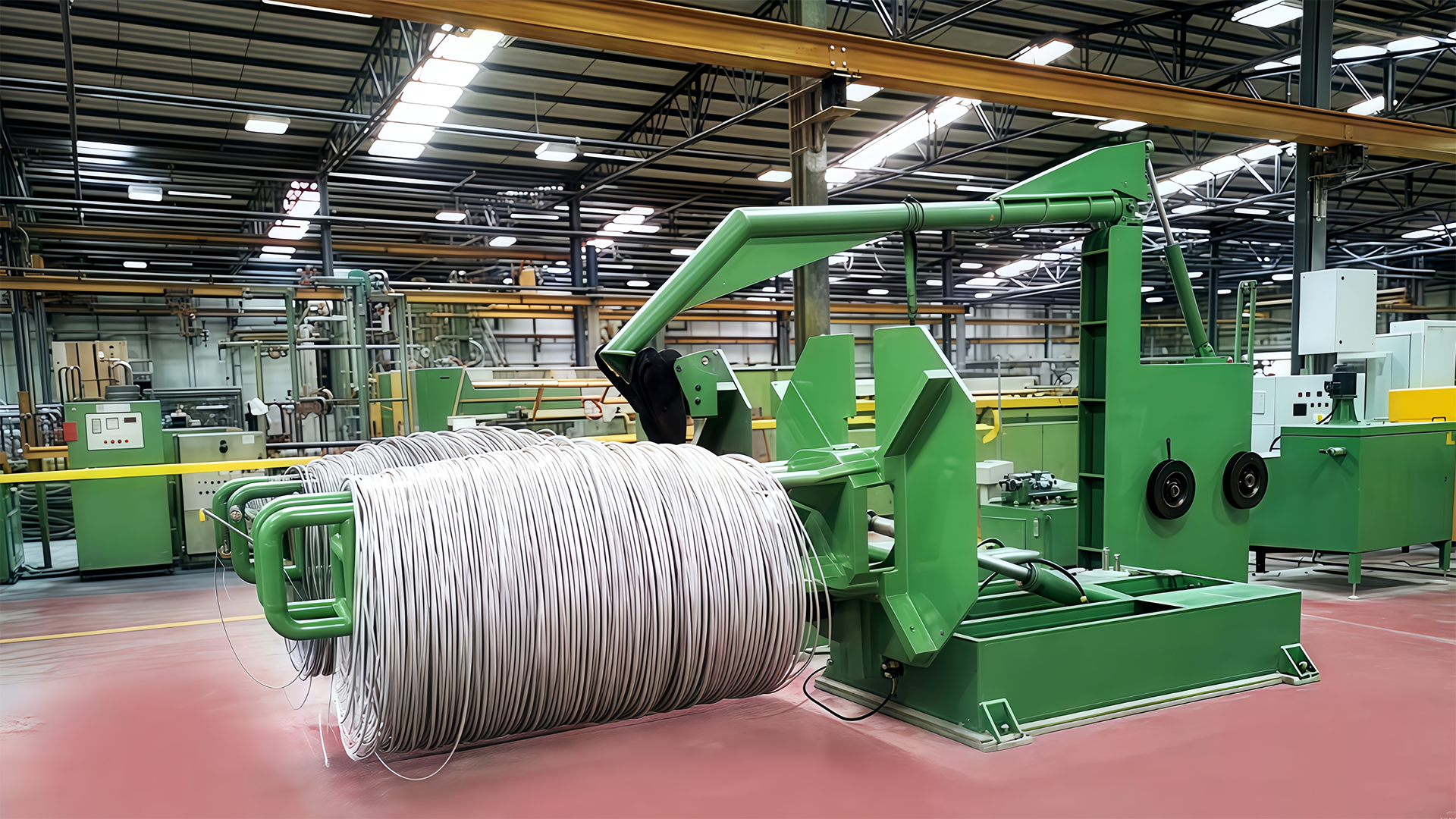
While the term "pay-off rack" is most closely associated with wire and cable manufacturing, the underlying mechanism, a spindle-mounted or freewheeling holder that releases material under controlled tension, applies equally well to a wire payoff stand used for copper conductors, a hose reinforcement line feeding steel or textile strands, or even a rope-making operation unwinding multiple fiber bundles at once. The specific design of the rack changes based on material weight, diameter, and flexibility, but the core function stays the same across industries.
Wire and Conductor Materials
Wire is the most common material associated with pay-off equipment, and for good reason. Copper, aluminum, and steel wires are almost always supplied on spools or reels, and a wire payoff stand is essential for feeding these conductors into drawing machines, stranding machines, or insulation extrusion lines at a controlled, consistent rate.
Bare and Insulated Copper Wire
Copper wire ranging from fine gauge magnet wire to thicker building wire is typically unwound from a pay-off rack before entering annealing, tinning, or insulation coating processes. Fine wire in particular requires low, extremely consistent tension, since even minor fluctuations can cause breakage during high-speed drawing.
Aluminum Conductor Wire
Aluminum conductors, commonly used in overhead power lines and lightweight cable applications, are also fed through pay-off racks, though the rack design often needs to account for the heavier spool weights typical of aluminum conductor coils, sometimes exceeding 500 kilograms per spool in industrial-scale operations.
Steel Wire and Wire Rope Strands
High-strength steel wire, used for everything from tire reinforcement to structural cabling, requires pay-off racks built with heavier-duty bearings and stronger braking systems, since steel wire spools can be significantly denser and heavier than equivalent-diameter copper or aluminum spools.
"The material dictates the machine — not the other way around."
Cable Products Fed Through Pay-Off Systems
Beyond raw wire, finished and semi-finished cable products are also commonly loaded onto pay-off racks, particularly during secondary processing steps such as jacketing, armoring, or bundling.
- Multi-conductor control cables being fed into overbraiding machines
- Coaxial cable cores requiring an additional shielding or jacket layer
- Fiber optic cable assemblies needing buffer tube application
- Automotive wiring harness sub-assemblies awaiting final bundling
- Armored power cables requiring steel wire or tape wrapping
In these cases, the pay-off rack is not feeding raw material into a primary process but rather feeding a partially completed cable into a secondary finishing operation, which places different demands on spool size and unwinding speed compared to raw wire drawing.
Tubing and Hose Materials
Flexible tubing and hose products represent another major category of materials fed through pay-off racks, particularly in industries producing hydraulic hose, pneumatic tubing, and medical-grade tubing.
Reinforcement Wire for Hydraulic Hose
Hydraulic hose manufacturing frequently uses pay-off racks not to feed the hose itself, but to supply the reinforcement wire braided or spiraled around the inner tube. A single high-pressure hydraulic hose can require four to six layers of wire reinforcement, each layer fed from its own set of spools mounted on a multi-spindle pay-off rack.
Plastic and Rubber Tubing
Finished plastic or rubber tubing, once extruded, is often coiled and later re-fed through a pay-off rack for secondary operations such as cutting, printing, or assembly into finished products like garden hoses or pneumatic air lines.
Fiber, Rope, and Textile-Based Materials
Pay-off racks are not limited to metal wire and rigid tubing. Fiber-based materials, including synthetic and natural fiber rope, textile reinforcement strands, and fiberglass roving, also rely on pay-off equipment during production.
Synthetic Fiber Rope and Cordage
Nylon, polyester, and polypropylene fiber strands are typically fed from spools mounted on creel-style pay-off racks before being braided or twisted into finished rope. These operations often involve dozens of individual spools running simultaneously, requiring careful tension balancing across the entire rack.
Fiberglass and Composite Reinforcement
Fiberglass roving used in composite manufacturing is another material commonly fed through pay-off systems, particularly in pultrusion processes where multiple fiber strands must be pulled through a resin bath at a precisely controlled, synchronized speed.
Comparing Material Types and Typical Pay-Off Requirements
Different materials place very different demands on a pay-off rack in terms of spool weight capacity, tension precision, and spindle configuration. The table below summarizes typical requirements across common material categories.
| Material Type | Typical Spool Weight | Tension Sensitivity |
|---|---|---|
| Fine Copper Wire | 5-50 kg | Very high |
| Steel Wire / Wire Rope | 100-800 kg | Moderate |
| Hydraulic Hose Reinforcement Wire | 50-300 kg | High |
| Synthetic Fiber Rope Strands | 10-80 kg | Moderate to high |
| Fiberglass Roving | 15-40 kg | Very high |
These figures vary by manufacturer and specific product line, but they illustrate why a pay-off rack designed for heavy steel wire rope cannot simply be repurposed for fine fiberglass roving without significant modification to the braking and tensioning systems.
Selecting the Right Rack for Your Material
Choosing the correct pay-off rack configuration starts with understanding the physical properties of the material being fed, since this determines nearly every downstream design decision.
- Identify the maximum spool or reel weight the rack will need to support during continuous operation.
- Determine the material's tension sensitivity, since fine wire and fiber strands require far more precise tension control than heavier steel or rope products.
- Consider whether a single-spindle wire payoff stand is sufficient, or whether a multi-spool configuration is needed for braiding or bundling operations.
- Account for the material's flexibility and bend radius, since overly rigid materials may require larger diameter spindles to avoid kinking during unwinding.
- Factor in line speed requirements, as higher-speed processes demand more responsive braking and tension feedback systems.
Manufacturers who properly match their pay-off rack specifications to their material type typically see fewer production interruptions and a measurable reduction in scrap rates, particularly for high-value materials like fine copper wire or fiber optic strands where breakage during unwinding results in significant material loss.
Key Takeaways
- Pay-off racks feed a wide range of materials, including wire, cable, tubing, hose reinforcement, rope, and fiberglass roving.
- A wire payoff stand is the most common configuration, used across copper, aluminum, and steel wire applications.
- Hose and tubing manufacturers rely on pay-off racks primarily to feed reinforcement wire rather than the hose itself.
- Fiber and rope production often uses multi-spool creel-style racks to feed dozens of strands simultaneously.
- Matching rack design to material weight and tension sensitivity is critical for minimizing scrap and downtime.